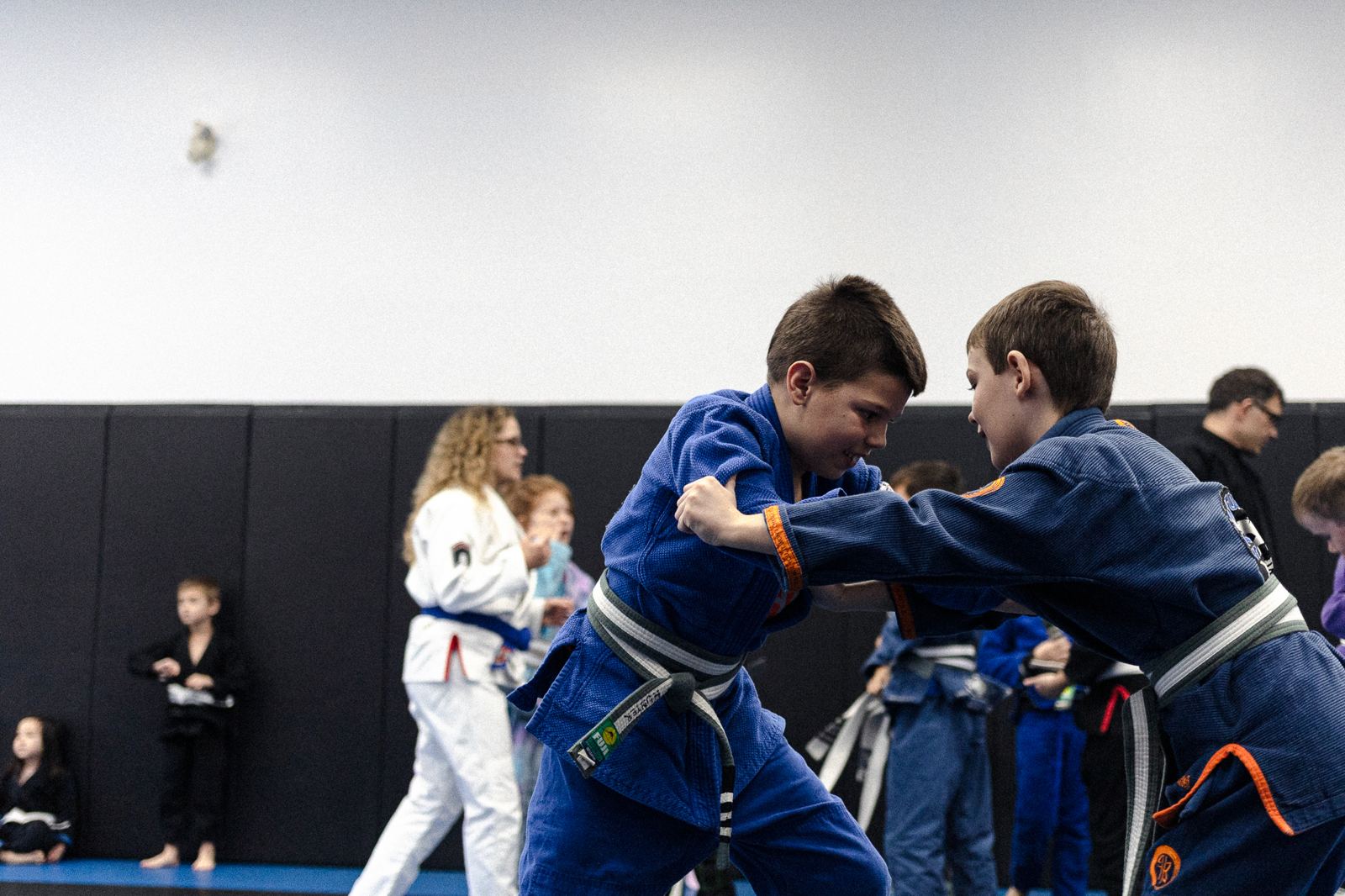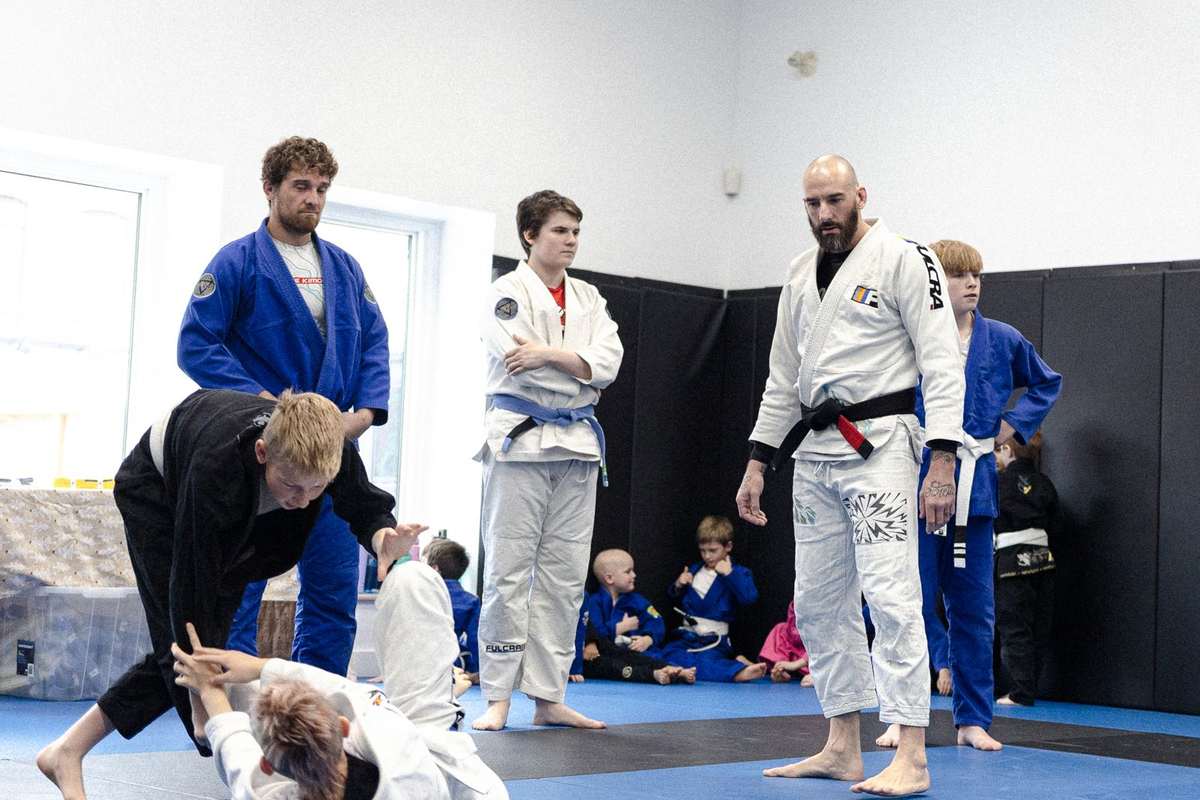
Yes, Brazilian jiu-jitsu is one of the best martial arts for kids. It builds confidence, focus and discipline through safe, no-strike grappling, gives children practical anti-bullying skills, and burns off energy in a structured, supervised class. Most Stratford parents notice a calmer, more focused child within a few months.
Every week a parent walks into our academy in Stratford and asks some version of the same question: is BJJ actually good for my kid? Usually they are weighing it against hockey, soccer or another martial art, and they want a straight answer, not a sales pitch. Here is ours, after running youth jiu-jitsu programs since 2013.
Is BJJ safe for children?
This is the first thing every parent asks, and it is the right question. Brazilian jiu-jitsu is a grappling art: leverage, control and position, with no striking. Nobody punches or kicks. Children learn to "tap" the moment anything feels uncomfortable, and the class stops there. Add small coach-to-kid ratios, age-appropriate technique, two-plus adults on the mat and clean, sanitised mats, and you have a sport with lower injury rates than soccer, hockey or running. The first thing we teach a child is how to fall safely and how to tap, before anything else.
What are the benefits of BJJ for kids?
The benefits go well beyond fitness. Because progress on the mat is earned one small step at a time, jiu-jitsu quietly teaches children that effort pays off. Here is what we see again and again:
What BJJ builds in kids
- Confidence that is earned, not handed out, from solving real problems against a resisting partner
- Focus and discipline that follow them home and into the classroom
- Coordination, balance and fitness through an hour of genuine physical activity
- Self-defence that works without throwing a punch
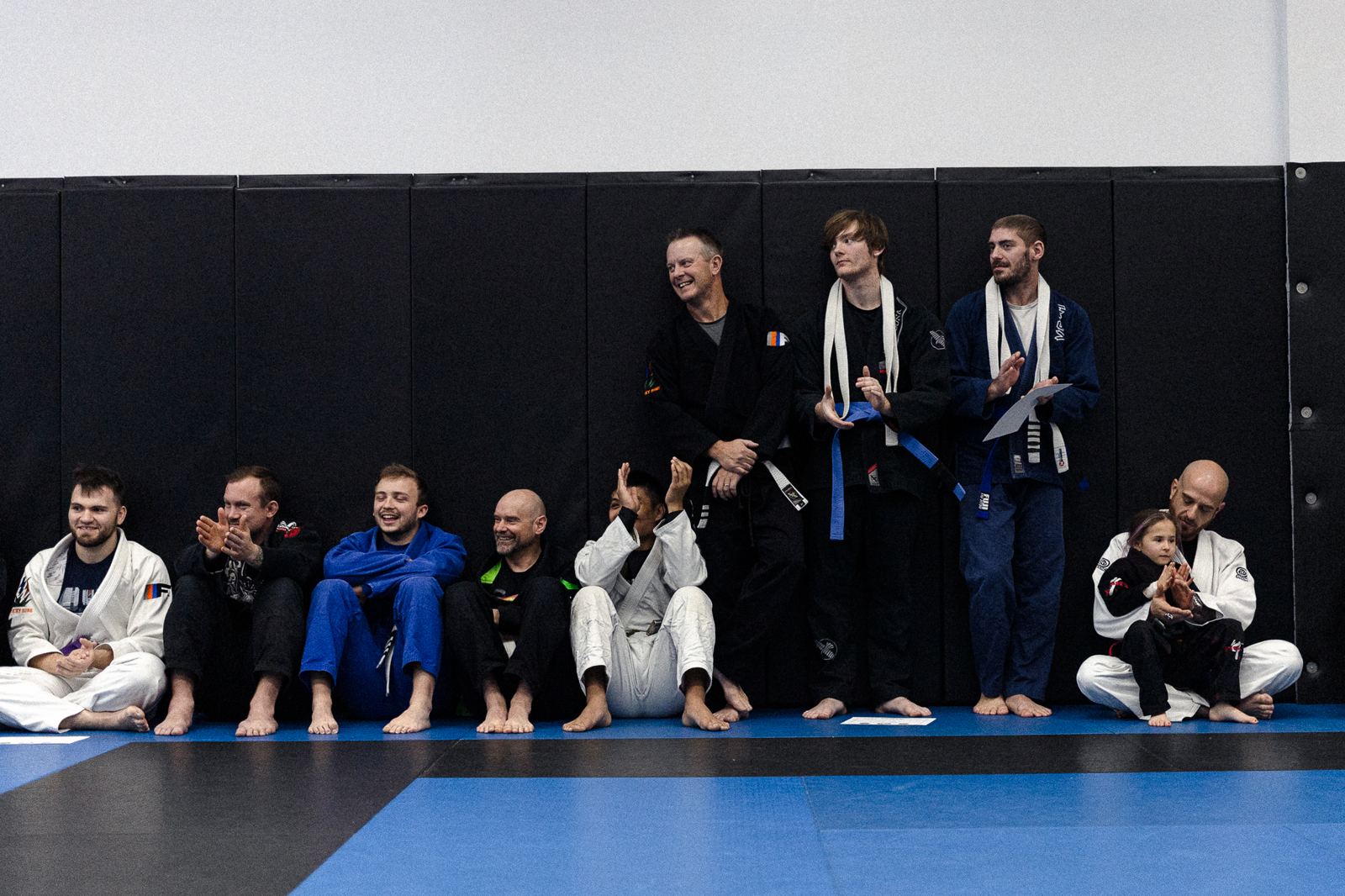
- Friendship and a supportive community of kids who train and grow together
- Emotional control: staying calm under a little pressure is a life skill
Those last points matter most to parents. A child who learns to stay composed when an opponent is on top of them tends to stay composed when a test, a sibling or a schoolyard situation gets stressful.
Does BJJ help with bullying?
Yes, and not in the way people expect. We teach kids to be bully-resistant, not bully-creating. The rule on our mats is simple: use your words first, walk away when you can, find an adult, and only ever use jiu-jitsu to protect yourself. Because BJJ is control-based, a trained child can keep themselves safe and de-escalate a situation without hurting anyone. Parents consistently tell us the bullying stopped being a problem, partly because the skills work, and mostly because the quiet confidence is obvious to everyone around them.
Does BJJ really help kids manage stress?
It does. Hard physical activity that demands total attention is a proven way to burn off nervous energy and lower stress hormones like cortisol, and it is very hard to worry about anything else when you are problem-solving on the mat. For high-energy kids, and for many kids with ADHD, that combination of structure, movement and focus is exactly what helps. They leave class tired in the best way, and a lot of parents notice better sleep and a calmer evening at home.
What age can a child start BJJ?
Children can start as young as four. At Stratford BJJ we group kids by age and stage so they are always learning with the right peers, never thrown in with teenagers:
Our kids programs
- Tots (ages 4–6): games, movement and confidence; coordination over competition
- Kids (ages 6–9): a strong foundation of positions, escapes and anti-bullying skills
- Youth (ages 10–12): real technique, drilling and the option to compete
- Teens (ages 13–15): the bridge into adult training
If you are wondering whether to put a four-year-old in jiu-jitsu, the honest answer is that the Tots class is built for exactly that, short, fun and game-driven, with no pressure.
What do Stratford parents notice after a few months?
The on-the-mat skills come quickly, but the changes parents mention first happen off the mat. After two or three months of training twice a week, the most common things we hear are: their child is calmer and more focused at home, more confident with new people, and the one that surprises parents most: a teacher has asked what changed. That is the real return on a kids martial arts program: a child who listens better, bounces back faster and believes they can handle hard things.
How do you choose a good kids BJJ school?
Not every academy is the same. When you visit, watch how the instructors talk to the kids, are children engaged and participating, or just being managed? Ask whether coaches are background-checked and first-aid certified, whether the mats are cleaned after every class, and whether there is a clear curriculum and belt progression rather than "show up and roll." A good school will happily let you watch a class and try one for free before you enrol. (Those are the same standards we hold ourselves to.)
Curious whether your child will love it? The first class is free.
Book a Free Kids Class →Key takeaways
- BJJ is safe: no strikes, a tap-early rule, and lower injury rates than most team sports
- It builds confidence, focus, discipline and real self-defence
- It is genuinely anti-bullying: walk away first, protect yourself without hurting anyone
- Kids can start at four; classes are grouped by age and stage
- Most parents notice calmer, more focused kids within a few months
Frequently asked questions
Yes, ages 4 to 6 is a great time to start in a Tots program. At this age BJJ is taught through games that build coordination, balance and listening, with no submissions and plenty of supervision. It is about confidence and fun, not competition.
No. BJJ is a control-based grappling art with no striking, and we teach a strict walk-away-first rule. Kids learn to defend themselves and stay calm, academies that teach jiu-jitsu consistently report it makes children less likely to fight, not more.
Twice a week is the sweet spot for most kids, enough to build skill and routine without burning out. Once a week still delivers real benefits, especially when they are just getting started.
Many parents of high-energy kids and kids with ADHD find BJJ especially helpful. The structure, clear progression and physical activity give them a productive outlet, and the focus required on the mat often carries over to school and home.
Just comfortable athletic clothes, a water bottle and bare feet. We lend a gi for the first class, so there is nothing to buy before you try it.