If you have typed "too old to start BJJ" into a search bar at 11 p.m., you are in good company. It is the most repeated question adults ask before walking onto a mat, and the honest answer at 30, 40 and 50 is the same: no, but how you train should change with your decade. Here is what starting Brazilian jiu-jitsu later in life looks like on our mats in Stratford, without the cheerleading.
Is there an age cutoff for starting BJJ?
No. Brazilian jiu-jitsu (BJJ) is one of the few martial arts built on leverage and position rather than striking, designed so a smaller, older person can control a bigger, younger one. That is why people call it physical chess.
- It is never too late to start: the IBJJF's World Master Championship runs divisions from 30 up to competitors in their 60s and beyond.
- You do not need to get fit first. Two classes a week builds the engine for you.
- Three habits keep older beginners safe: tapping early, choosing partners and starting at two sessions a week.
If you want the short version, our starting BJJ over 30 page covers it. This is the decade-by-decade version.
What starting at 35, 45 and 55 looks like on the mat
What changes as you get older is recovery, not learning. Pretending you are 22 is the problem.
| Starting age | What actually changes | The adjustment that works |
|---|---|---|
| 35 | Muscles recover in a day or two. Tendons and ligaments adapt slower than your enthusiasm. Fingers and shoulders get sore from gripping. | Two classes a week for the first month, then three if nothing is nagging. Let go of grips instead of fighting them. |
| 45 | Recovery time stretches to 48 to 72 hours after a hard roll. Old knee and shoulder history matters more. | Keep 48 hours between sessions. Favour positional rounds over scrambles. Tell every partner it is your first month. |
| 55 | Connective tissue needs weeks and months to toughen. Ribs, knees and neck deserve the most respect. | Two sessions a week, 72 hours apart. Add a third only after a month with no lingering pain. |
A white belt who started later tends to be more coachable, ask better questions and bring life experience and dedication to a technical art. Progress can take longer, but the younger guys are not learning better. They are just recovering faster, and the reward at the end of every class is the same.
Why "get in shape first" is backwards
The most common message we get from adults is some version of "I am out of shape, so I will start jiu jitsu after I lose a bit of weight." Starting where you are is the whole point. The first month of training is the fitness program, and no treadmill routine prepares your hips, grip and breathing to grapple better than grappling does. Cardio, flexibility and functional strength arrive on their own by the third or fourth week. Technique only arrives if you show up.
Waiting is also a mindset trap: it turns your first class into a test you can fail. It is not a test. It is a room full of adults who felt clumsy on day one and get better by coming back.
How our Fundamentals class is paced for adults who started BJJ later
Every adult beginner at Stratford BJJ starts in BJJ Basics, our adult Fundamentals program, which has welcomed first-timers in their 30s, 40s and 50s since the academy opened in December 2013. Many drive in after work from St. Marys, Mitchell and Listowel.
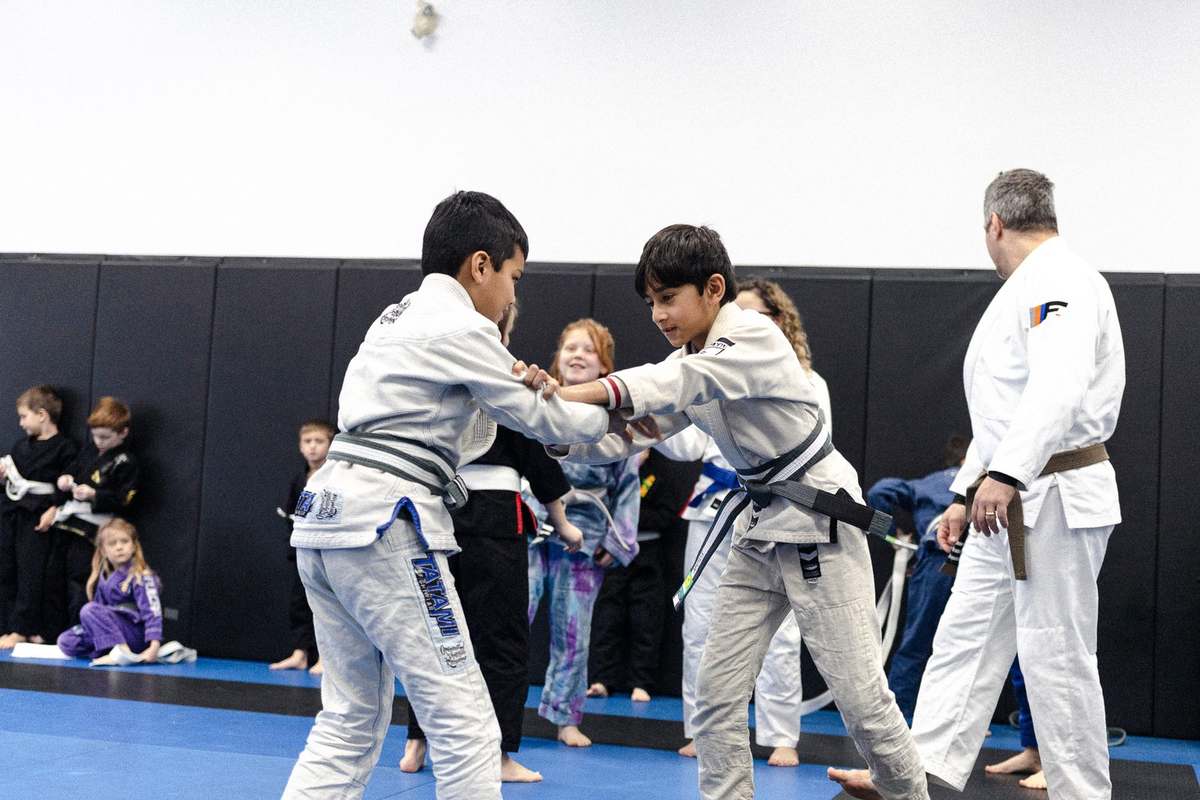
The pace reflects that. Class opens with a warm-up built around the movements you will actually use (hip escapes, bridges, standing up safely), not a conditioning session that leaves you gassed. The coach teaches one position and one or two techniques from it, and you drill them with a partner at a speed you control. Nobody rolls (spars) on their first day. Live rounds come in gradually and start positional: one job, one starting point, a reset when someone escapes. We lend you a gi, and a rashguard (the fitted shirt grapplers wear) is fine for no-gi nights.
Coach Ian Clark folds mobility and injury prevention into everything he runs, and our morning Yoga classes exist so members keep moving well and training longer. Check the schedule for current adult class times.
The 3 habits that keep older beginners injury-free
Injury risk in BJJ is not zero. A 2019 survey of 70 practitioners at one Hamilton, Ontario club, published in the journal Sports Health, found that most injuries happen in training rather than competition, usually sprains and strains to the fingers, neck, knees and shoulders. It found no link between how old a practitioner was and wanting to quit after getting hurt. What sends people home is ego. Three habits fix that.
1. Tap early
The tap (a hand slap on your partner or the mat that stops the action instantly) is the safety valve every grappler shares. Do it when a submission is on and getting tighter, not when it hurts. Nobody has ever earned a stripe for holding out against an armbar.
2. Pick your partners
You choose who you roll with, and you are allowed to say what you need. A good partner for a beginner over 40 is technically sound, similar in size and happy to go at your speed. The person who treats every round like a final is not your partner yet.
3. Start at two classes a week
Two sessions with recovery between them beats five sessions and a sprain. Hold at two until a full month passes with no lingering joint pain, then add a third. Sleep counts as training at 45 and 55. So does a couple of short strength sessions a week at home or a gym.
What the World Master Championship proves about age
If you still suspect BJJ is a young person's game, look at the sport's biggest tournament. The IBJJF World Master Championship ran 3 to 5 September 2026 in Las Vegas, with thousands of athletes aged 30 and up in seven divisions, from Master 1 for competitors in their early 30s to Master 7 for those in their 60s and beyond, at blue belt, purple and up. A 50 year old white belt is not an outlier there. You never have to compete, but an athlete twice your age is normal in this art, and plenty of them inspire the room.
The lineage backs it up. Our head instructor, Professor Ryan O'Shea, holds his black belt under Professor Jorge Britto in the Royler Gracie line. Royler's father, Helio Gracie, kept training into his 90s, and the position-first system we teach exists because the Gracies wanted a way to train that did not depend on being the most athletic person in the room. Coach Ryan brought that expertise to Perth County in 2013.
Want to see it for yourself? The first class is free.
Book Your Free Intro Class →What members who started later say
These are real Google reviews from people who train with us, quoted as they wrote them.
“Because of how wonderful the kids program & their coaches are, I joined as a member and am happy to say I'm over a year in now and have no interest in slowing down.”Robin Nancekivell, Google review
“A very encouraging group of people of all ages, shapes and sizes.”Michael MacIsaac, Google review
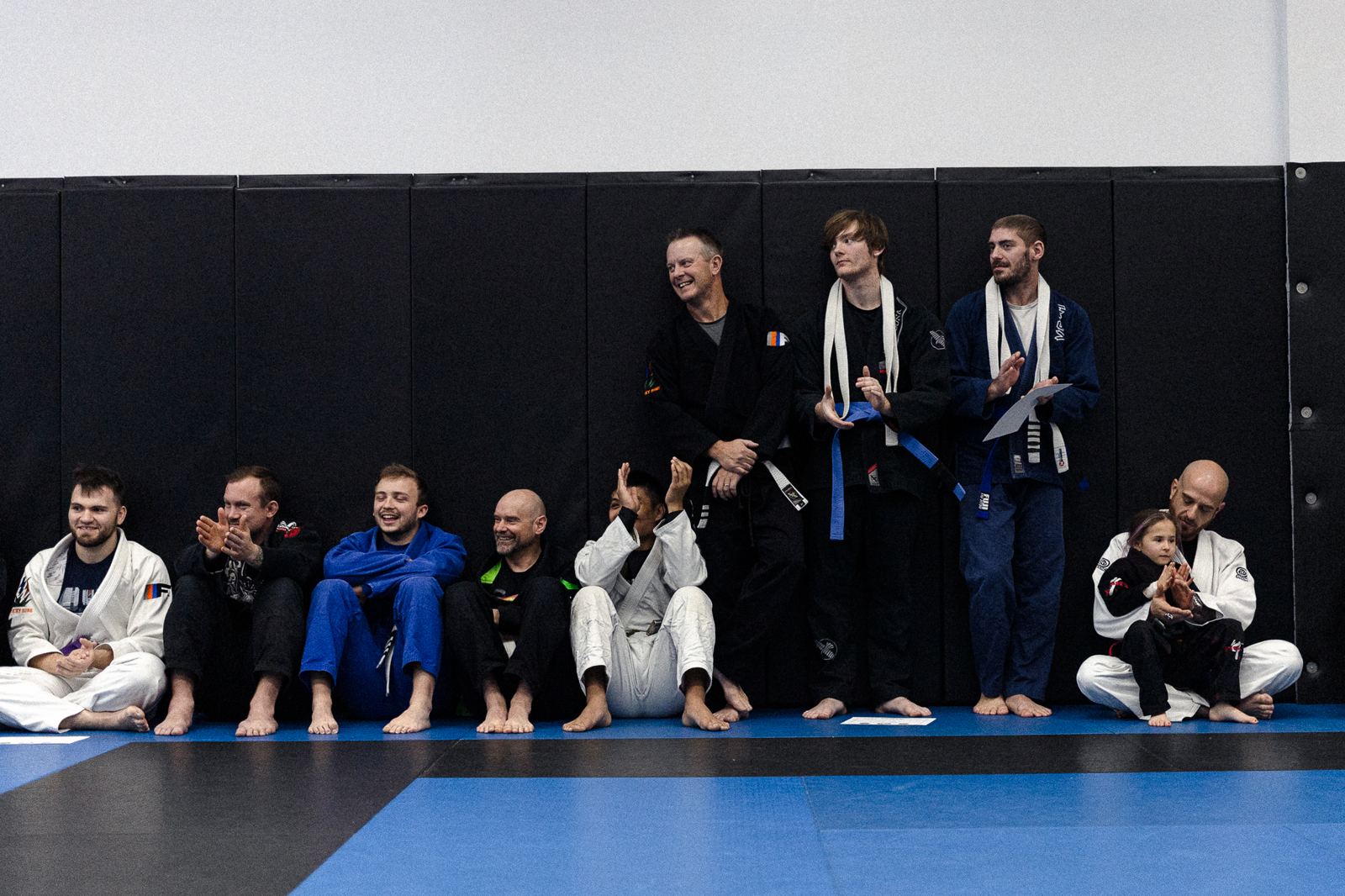
“I went in knowing no martial art and having very little fitness capabilities but everyone exhibited great patience and support.”Liz Fawcett, Google review
If "too old to start BJJ" has been the thing holding you back, the answer is no. Ready to step on the mats? Book a free intro class and we will take it from there. Questions first? Contact us or meet the coaching team.
Frequently asked questions
No. Forty is one of the most common ages to begin, and the World Master Championship has a division for it. Begin at two classes a week, tap early and choose partners who match your speed.
No. Waiting to get fit first is the most common reason adults never begin. The Fundamentals class is paced so the fitness arrives through training, usually by the third or fourth week.
Two sessions a week with at least 48 hours between them. Add a third only after a full month with no joint pain lingering between classes.
It is possible, but most training injuries are sprains and strains, and the three habits above cut the risk. Nobody spars on their first day, live rounds start positional, and tapping early protects your joints.
This article is for general information only. Always train under qualified supervision and consult a physician before starting a new physical activity.