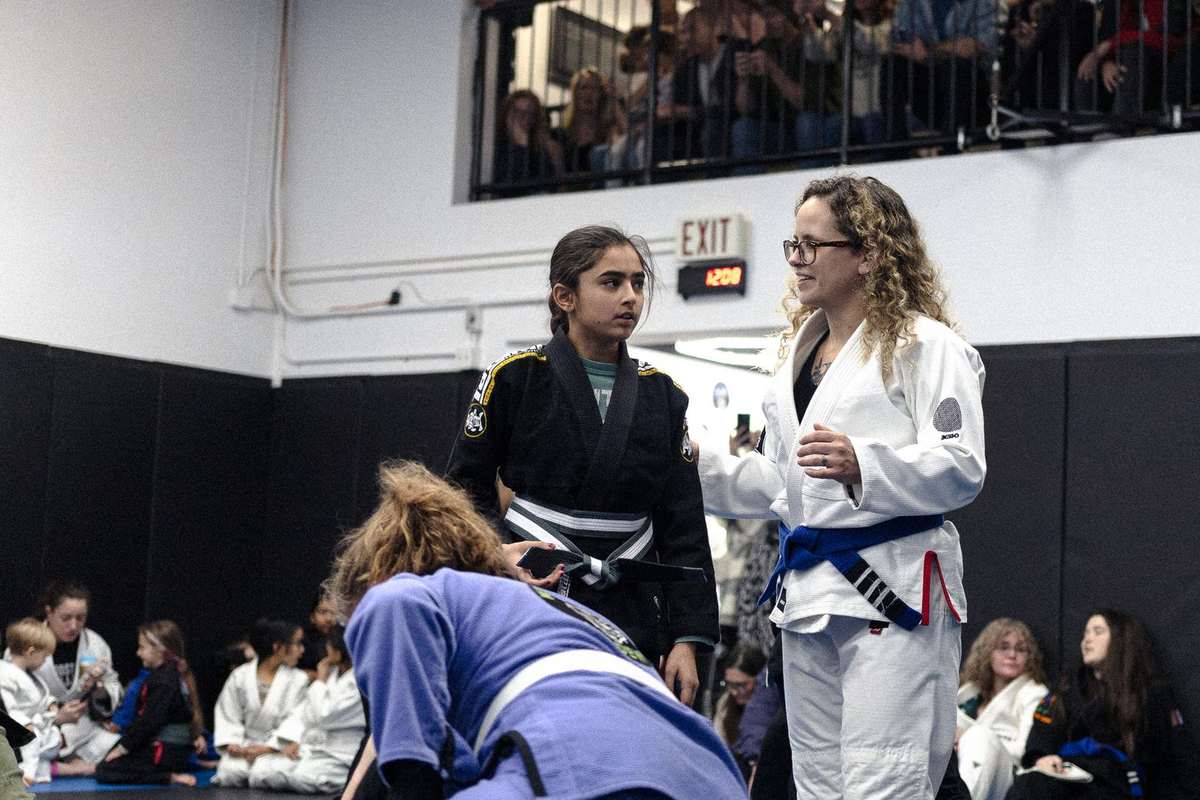
If your teenager just aged out of minor hockey or house-league soccer and you are wondering what comes next, you are not alone. Many Stratford parents hit the same wall around Grade 8 or 9: the old sport stopped fitting and the phone filled the gap. Jiu jitsu for teens is one of the few answers that works for the shy kid and the athlete in the same room. Here is what Brazilian Jiu-Jitsu (BJJ) looks like for ages 13 to 17 at Stratford BJJ, and how to start.
Key takeaways for parents
- Teens BJJ Basics at Stratford BJJ runs Tuesday and Thursday from 4:00 to 5:00 pm for ages 13 to 15, timed around school and homework.
- Every Stratford BJJ coach holds First Aid and CPR certification, NCCP Safe Sport certification and a Vulnerable Sector police check.
- The first class is a free intro class with a loaner gi, so there is nothing to buy before your teen decides.
Why 13 to 17 is a strong age to start Brazilian jiu-jitsu
Thirteen is not late. Sport for Life, the body behind Canada's long-term development model, puts girls aged 11 to 15 and boys aged 12 to 16 in the "Train to Train" stage, the window when the growth spurt hits and young athletes consolidate real sport skills. A teenager who starts jiu-jitsu training now is learning right when the model says technique takes hold.
The bigger issue is what happens when nothing fills the gap. The Canadian Fitness and Lifestyle Research Institute found that 67 percent of youth aged 12 to 17 played a sport in 2022, and a recent federal sport report notes that dropout climbs from age 16, especially for girls. Only 21 percent of 12 to 17 year olds met the Canadian 24-Hour Movement Guidelines target of 60 minutes of moderate to vigorous activity a day. A year-round jiu jitsu program with a fixed timetable is a simple way to help your child keep that number honest.
What a teen BJJ class actually looks like, and the class benefits
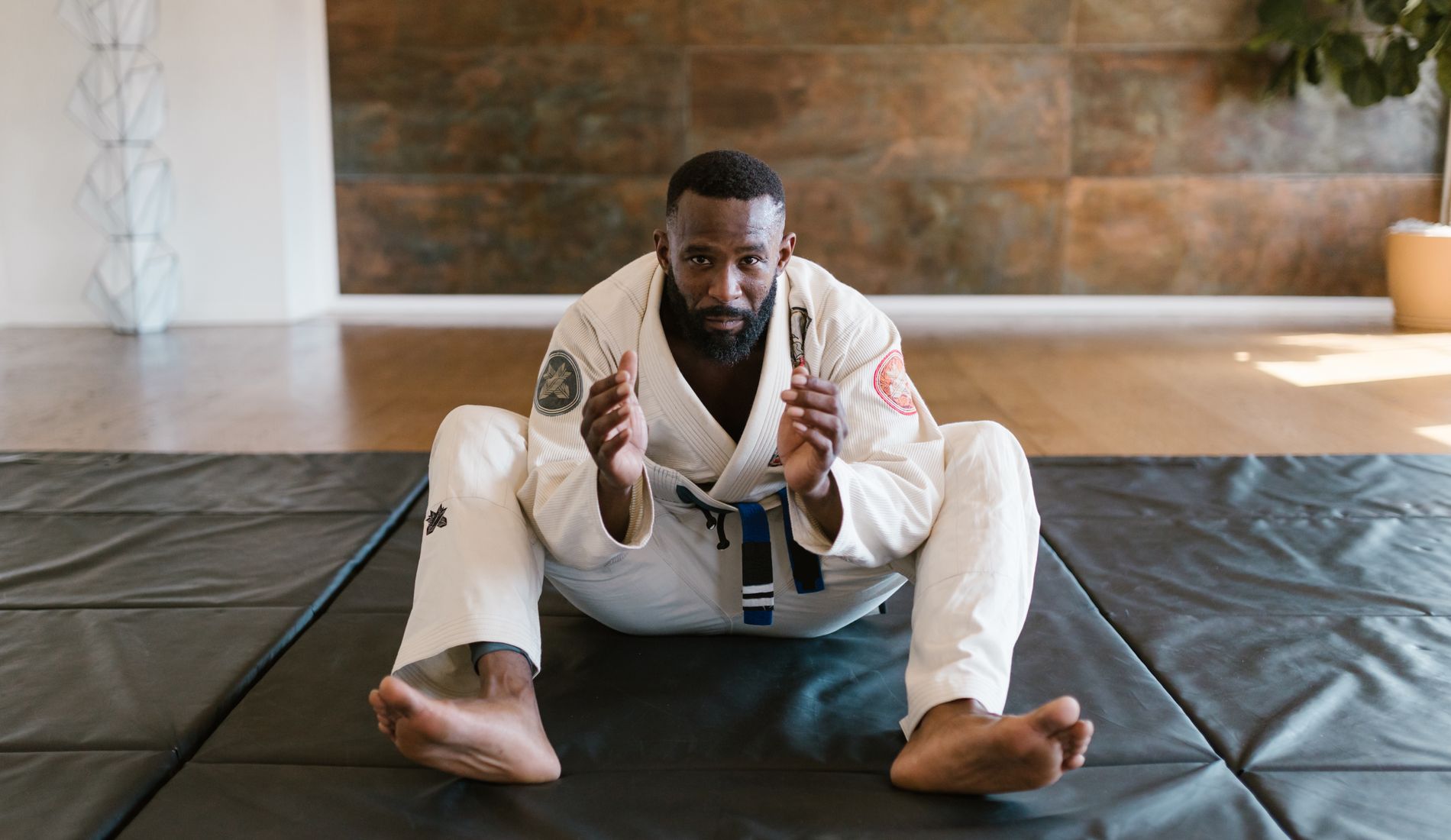
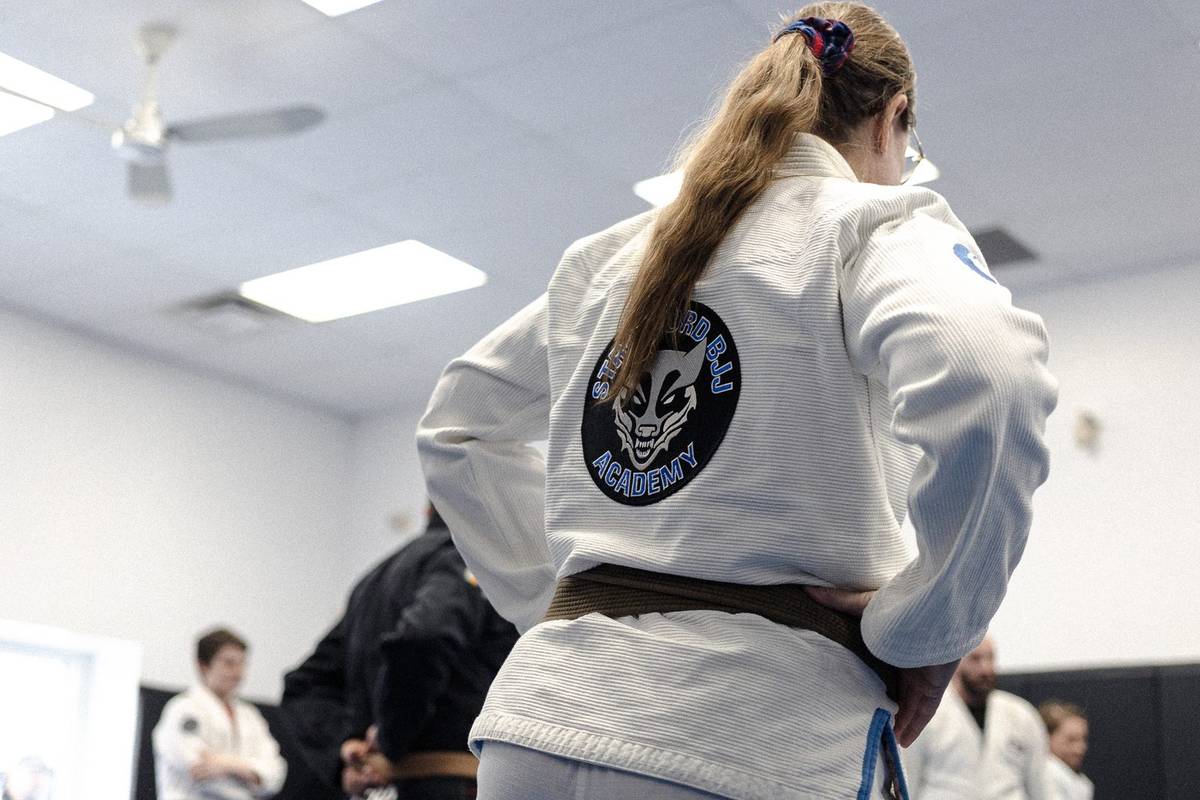
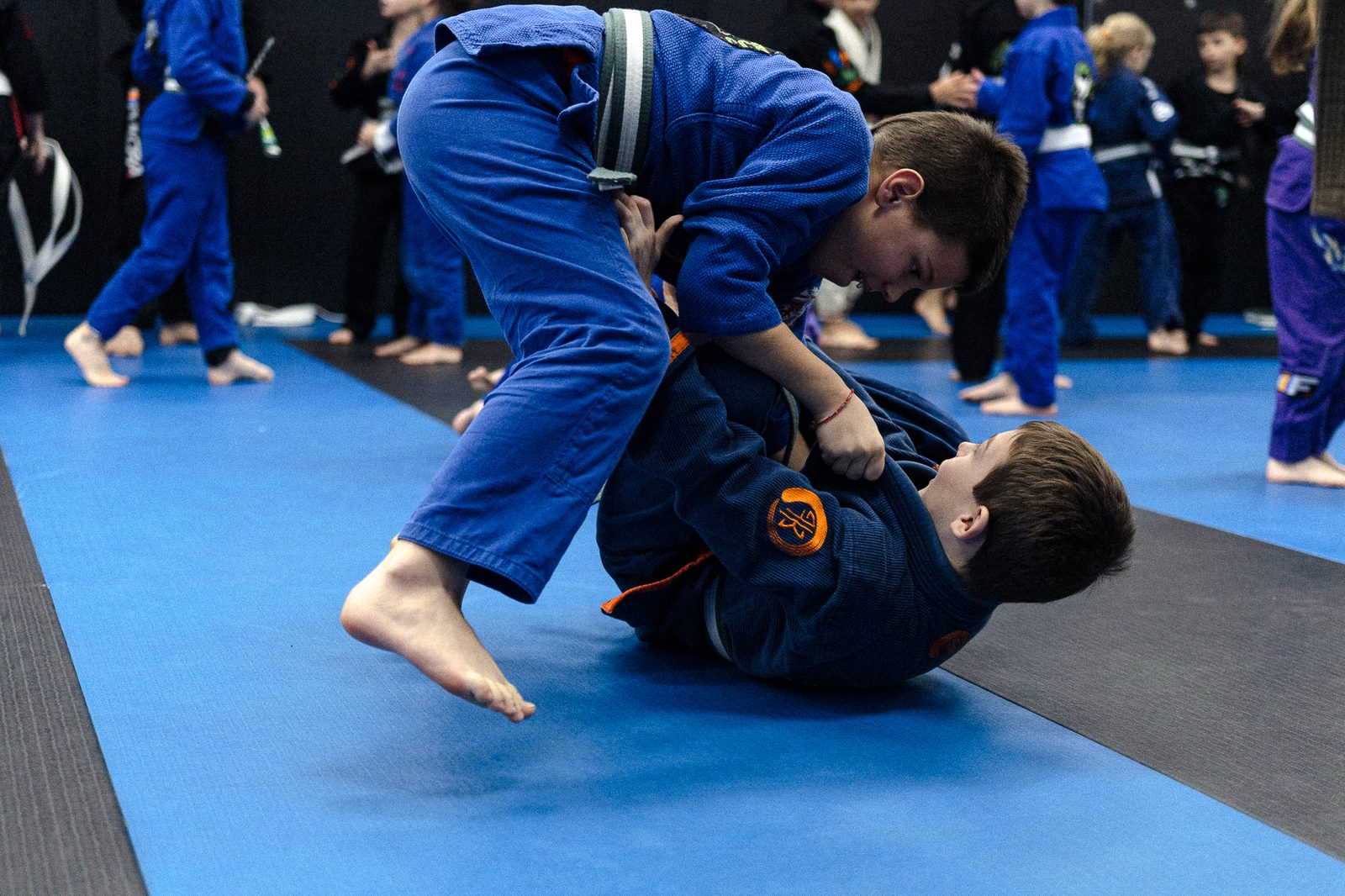
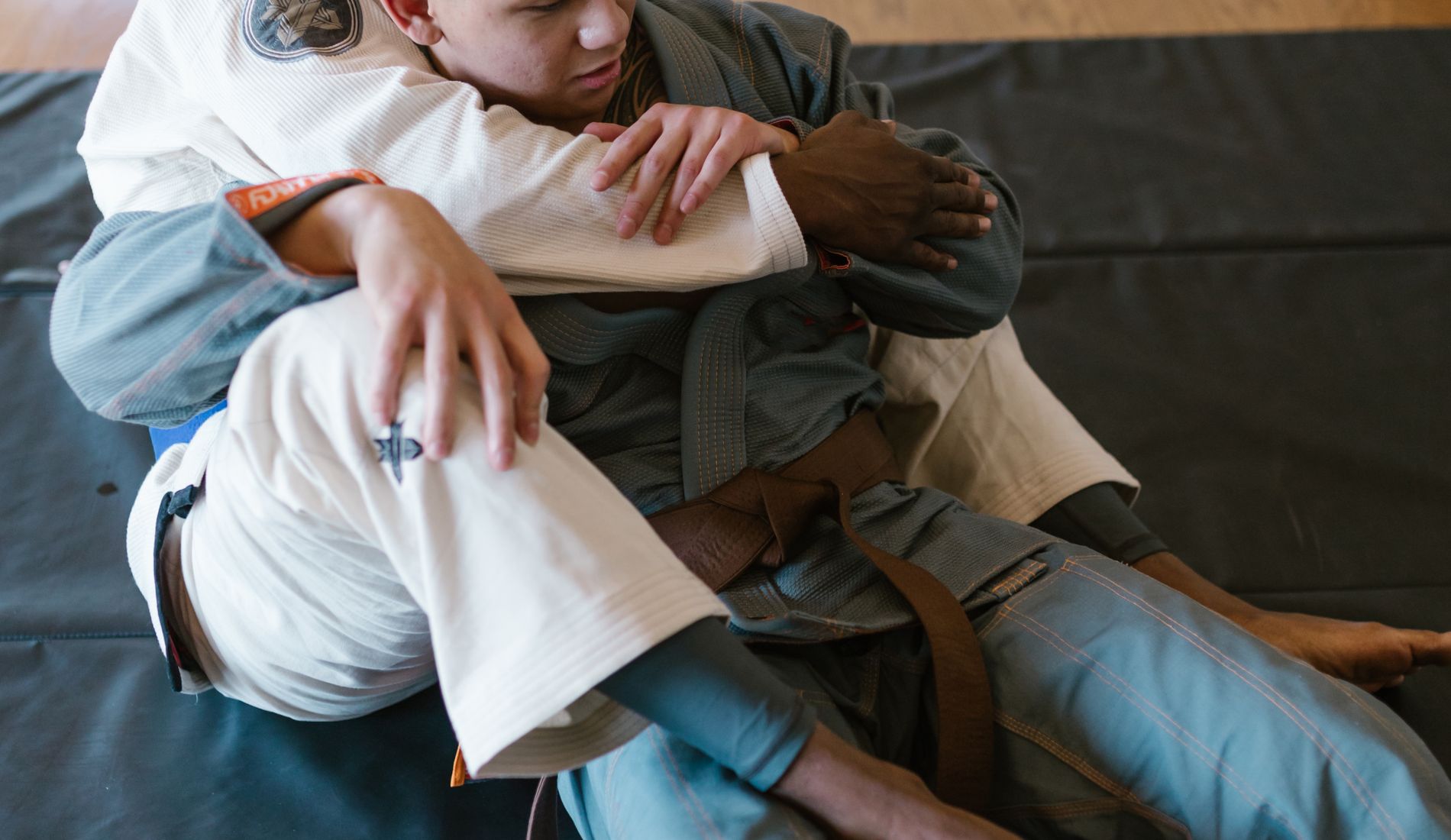
Every class runs the same shape, so your teen always knows what is coming. A light warm-up of basic movements, then the coach breaks down one technique of the day step by step and students learn it by drilling with a partner. The last block is situational sparring and live rolling (rolling is the jiu-jitsu word for practice grappling) at a pace that fits each teen. Classes are co-ed and trained in the gi, and a coach walks the room the whole time.
A few words you will hear in class, explained plainly:
- Gi: the cotton jacket and pants students train in. We lend one for the free class.
- Tap: the universal stop signal. A student taps their partner or the mat and everything stops immediately.
- Guard, mount and side control: the main positions in jiu-jitsu. Students build the skill to hold them and to escape them, so they are never stuck.
Teen jiu-jitsu training options for every age group
Here is how the beginner classes line up on our schedule:
| Class | Days and time | Ages |
|---|---|---|
| Teens BJJ Basics | Tuesday and Thursday, 4:00 to 5:00 pm | 13 to 15 |
| BJJ Basics (Teen/Adult) | Monday and Wednesday 7:00 pm, Friday 6:00 pm | Teens and adults |
| Women's Only BJJ | Tuesday and Thursday, 6:00 to 7:00 pm | 13 and up |
How we coach the shy teen and the athlete in the same room
Most parents ask a version of the same question: will my kid fit? The room is built for both ends of the spectrum, and has been since 2013.
For the teen who is nervous or not naturally athletic, we pair them with a friendly partner and keep the intensity matched to them, not to the loudest kid in the room. There is no cardio test, no "prove yourself" moment and no public correction. Most teens who walk in have never done a martial art. Coaches break every movement into age-appropriate pieces in a positive environment, which is how quieter teens build confidence, and that self-confidence tends to follow them to school. Parents sometimes ask about dealing with bullying: jiu-jitsu provides calm, control and the confidence to walk away, though we never promise it fixes a situation.
For the athlete, jiu-jitsu is a puzzle that never runs out. The full curriculum covers positional control, escapes, submissions and live rolling, with optional competition prep for teens who want to test themselves. Our teens classes are taught by Coach Alex Schweinsberg, a BJJ black belt and 2nd-degree judo black belt who has trained and taught in Japan, Canada and the USA, and who is obsessed with clean fundamentals and technical precision.
Not sure which side your teen lands on? Most land in between, and we can walk you through your first class step by step.
Is jiu-jitsu safe for a teenager, and does it teach self-defence?
Jiu-jitsu is a contact sport, so we will never promise zero risk. The tap stops everything, coaches supervise every round and teens are matched by size, physical ability and experience. Because Brazilian jiu jitsu uses controlled movements and leverage rather than strikes, most of a teen's training time is spent on positioning, not on getting hit.
The bigger safety piece for parents is who is coaching. Before anyone leads a class at Stratford BJJ, they hold current First Aid and CPR certification, complete a Vulnerable Sector police check, carry NCCP Canadian Safe Sport and Ethics certification and finish our in-house instructor program. The full standard is on our instructors page. Self-defence skills and essential life skills like staying calm under pressure are real benefits of practising jiu-jitsu, and so is a safe and supportive environment, but the training environment always comes first.
How teens move from beginner classes into the adult mat
Teens BJJ is the bridge from our youth classes to adult training. Teens who come up from Youth BJJ work the full curriculum with situational sparring and live rolling, then graduate into the Teen/Adult BJJ Basics classes. Those run the same predictable format every session, so the adult room feels like a welcoming environment rather than an intimidating one.
There is no fixed date on that move and no belt requirement. Coach Ryan and the team make the call with you and your teen based on maturity, size and consistency. Teens aged 16 and 17 usually start straight in the Teen/Adult classes on Monday and Wednesday at 7:00 pm and Friday at 6:00 pm. Either way, your teen keeps the same coaches and the same programs pathway through high school.
Jiu jitsu for teens in Stratford and Perth County
We train on Downie Street in Stratford, with free parking on site, and teens come to us from across Perth County: St. Marys, Mitchell, Sebringville, Tavistock and Listowel. For families whose summers follow the Stratford Festival season, jiu-jitsu training runs the same in July as it does in January.
Stratford BJJ opened in December 2013 and is the original academy of its family. Professor Ryan O'Shea, our founder and head coach, is a black belt in the Royler Gracie line under Professor Jorge Britto and a founding member of the Jiu-Jitsu For Life Team. Your teen learns that same position-first system from a coaching team with more than 65 combined years on the mat, and the skills and confidence it builds carry beyond the mats.
Want to see it for yourself? The first class is free.
Book Your Free Intro Class →What members and parents say
These are real Google reviews from people who train with us, quoted as they wrote them.
“The coaches are world class and are not only technical but also patient and genuinely invested in every student’s progress.”Solochance, Google review
“I have made a lot of great friends and have gained confidence and strength.”Jocelyn Johnson, Google review
“I feel safe with the training partners, trust with the coaches ...”MP Canine Academy, Google review
Ready to see if jiu jitsu for teens is the right fit for your 13 to 17 year old? Book a free intro class, a real scheduled class with a coach and a loaner gi, and we will take it from there. Questions first? Reach us through the contact page and a coach will answer personally.
Frequently asked questions
Yes. Jiu-jitsu gives teens an hour of physical fitness, a structured skill to work on and a peer group that shows up every week. It suits shy teens and athletes alike because progress happens against yourself, not a scoreboard.
No. Sport for Life's development model puts 15 year olds in the stage when sport skills consolidate, and most teens who start at Stratford BJJ have never trained before. A 15 year old joins Teens BJJ Basics and a 16 year old starts in the Teen/Adult classes.
No experience is needed, and we provide a loaner gi for the free intro class. Bring athletic clothes, a water bottle and flip-flops for walking off the mat. Arrive 15 minutes early so a coach can say hi.
Training frequency depends on your teen's schedule and goals. One steady class a week is plenty to start and plenty to progress, and a second or third session can be added later. Consistency beats volume at this age.
Yes, once teens are ready to learn it, they work situational sparring and live rolling in every class. A coach is on the mat the whole time, partners are matched by size and experience and the tap stops any round instantly. We never promise zero risk, but we control the environment.
This article is for general information only. Always train under qualified supervision and consult a physician before starting a new physical activity.