If you have typed "martial arts Stratford" into your phone this month and come away more confused than you started, you are not alone. Every karate, taekwondo, kickboxing and MMA school in Perth County promises confidence and discipline. We run the original jiu-jitsu academy in Stratford, so we have a bias, and we will name it. What we will not do is pretend the other arts have nothing to offer. Here is a plain comparison, so you can pick the right after-school class for the child you actually have.
Key takeaways
- Brazilian jiu-jitsu is the only art on this list with no punches or kicks at all, so a child never learns to hit and never gets hit.
- The American Academy of Pediatrics advises that children avoid martial arts that reward blows to the head, and the Canadian Paediatric Society opposes boxing for anyone under 18.
- A 7-year-old in kids BJJ spends year one learning to fall, escape and tap, with short live practice from the first weeks and stripes on a white belt as they progress.
- Karate and taekwondo are the right pick for a kid who loves forms, solo drills and a clear striking self-defence path, and taekwondo is an Olympic sport.
- Stratford BJJ kids classes run weekday late afternoons plus Saturday mornings, and the first class is a free intro so you can test the fit.
What does each martial art actually train a kid to do?
Every art on this list builds fitness, coordination and discipline. The differences are what your child does with their hands and feet, and how much contact they take.
| Art | What it trains | Contact for kids | How kids rank up |
|---|---|---|---|
| Brazilian jiu-jitsu | Grappling: positions, escapes, control, submissions | Steady but controlled, and no strikes ever | White belt with stripes, then grey, yellow, orange and green by age |
| Karate | Striking: punches, kicks, blocks and kata (solo forms) | Light or no-contact point sparring, usually later in year one | Coloured belts, often 1 to 3 in the first year |
| Taekwondo | Striking, mostly kicks, plus poomsae (forms) | Light-contact sparring in gear, with head contact banned under 12 at most youth events | Coloured belts on a similar pace to karate |
| Boxing, kickboxing and Muay Thai | Punches, kicks, pad work and footwork | Mostly bag and pad work early, light technical sparring later | No belts, so progress rests on skill and coach judgement |
| MMA | A mix of striking and grappling | Split by discipline for kids, and full mixed sparring is rare | Usually borrows BJJ belts for the grappling half |
The verdict, art by art. Jiu-jitsu is the choice when you want a kid who can protect themselves without ever throwing a punch. Karate and taekwondo suit kids who thrive on structure, memorized forms and a visible belt ladder. Boxing and kickboxing are a great workout, but for young children the head contact question decides it. MMA is really two arts taught side by side, and most kids' programs keep the halves apart until the teen years, which is why "BJJ vs MMA" for a 9-year-old is not a fair fight.
What does the first year look like for a 7-year-old and a 12-year-old?
Parents rarely ask us about black belts. They ask what Tuesday at 5pm looks like in October.
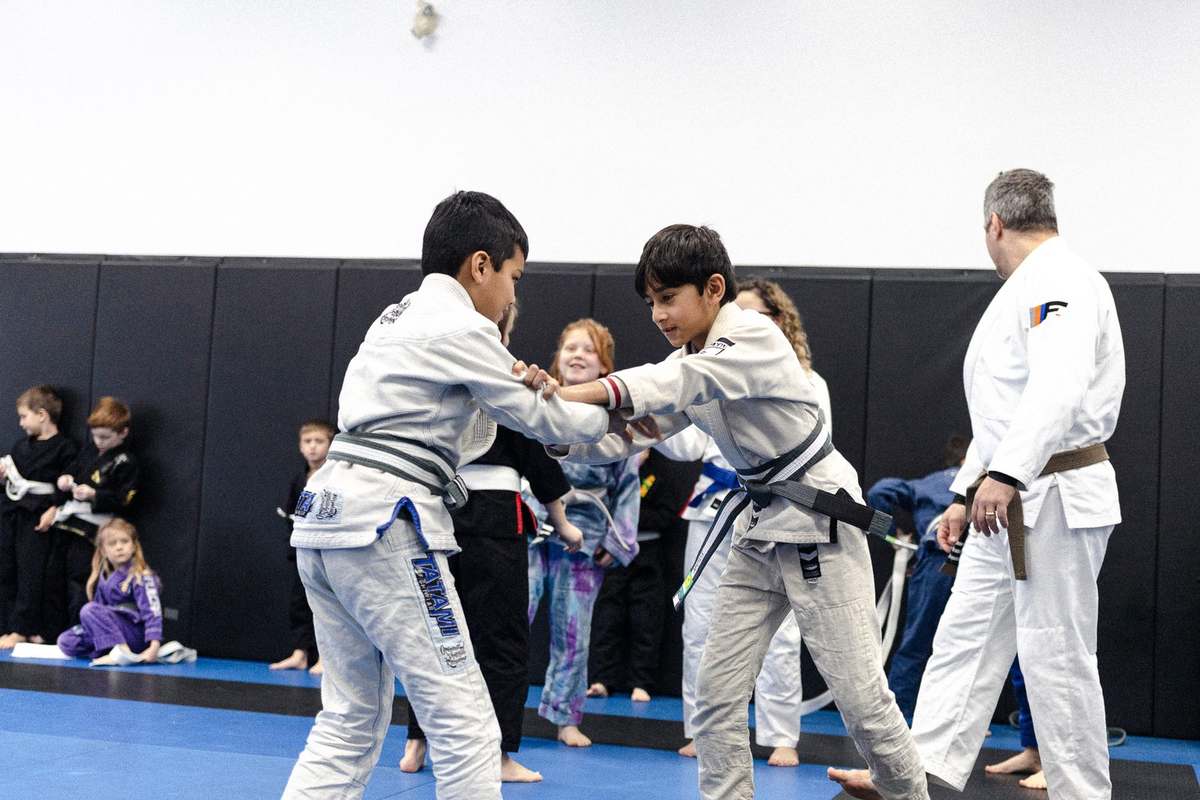
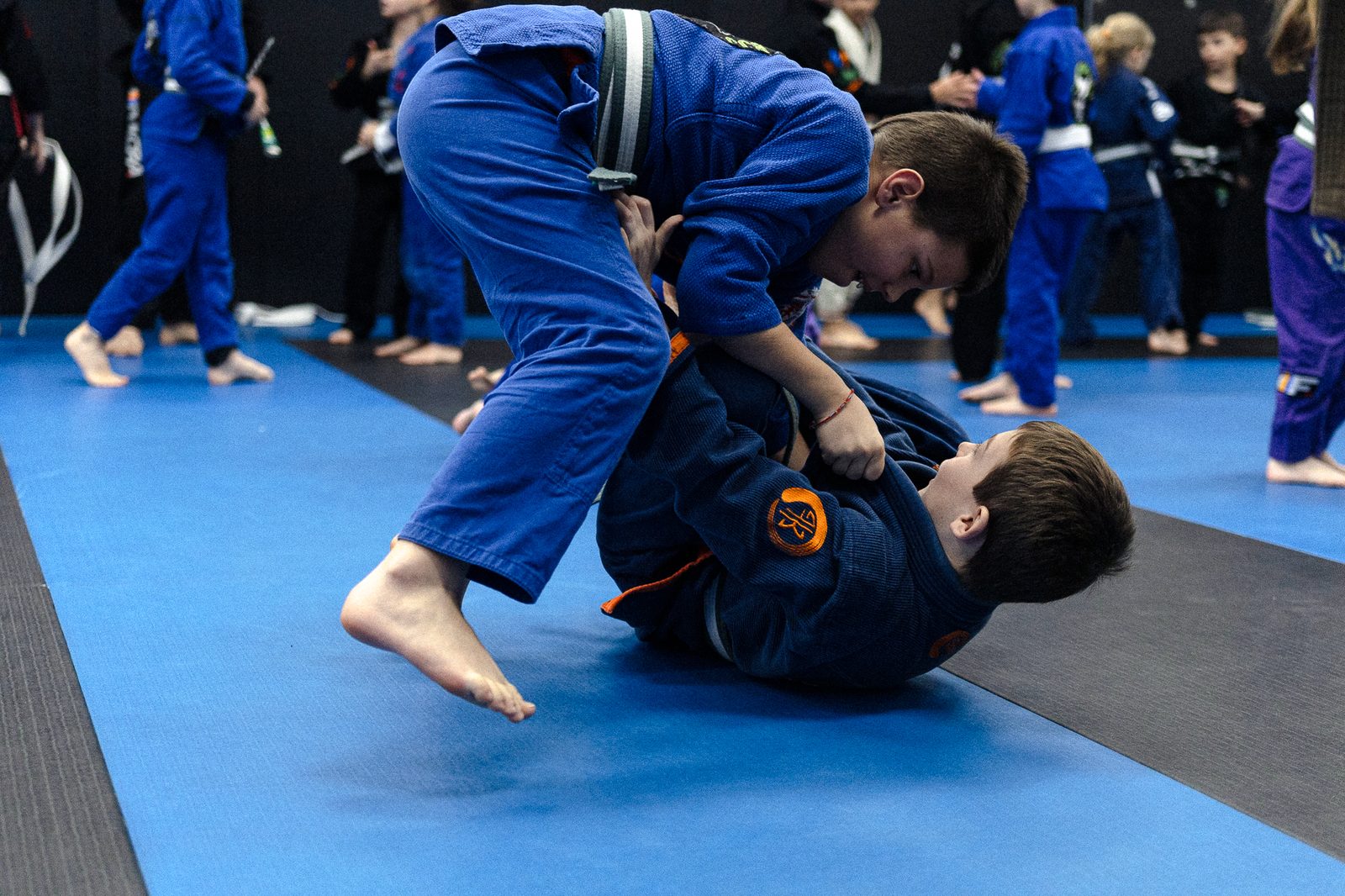
A 7-year-old in jiu-jitsu lands in a beginner kids class with children close to their own age, never with teens. The first weeks are about falling safely, moving on the mat and learning to tap, which means patting your partner to stop the moment anything feels uncomfortable. Live practice starts early but small: a few seconds trying to escape a pin from a set position, with a coach walking the room. By spring they know a handful of positions and escapes, have earned a stripe or two and can stay calm with a partner on top of them.
A 7-year-old in karate or taekwondo spends more of year one on solo work: stances, blocks, kicks in the air and their first form. Partner drills are pre-arranged, and light point sparring usually arrives mid to late in the first year, in gear. Belt tests come often, which some kids love.
A 12-year-old moves faster in every art. In our youth group they drill real technique, roll (spar on the ground) for longer rounds and can choose to enter a competition if they want to. In a striking art they will spar sooner and with more contact, which is why the paediatric guidance below matters more at this age, not less.
Why no-strike grappling suits kids who need confidence
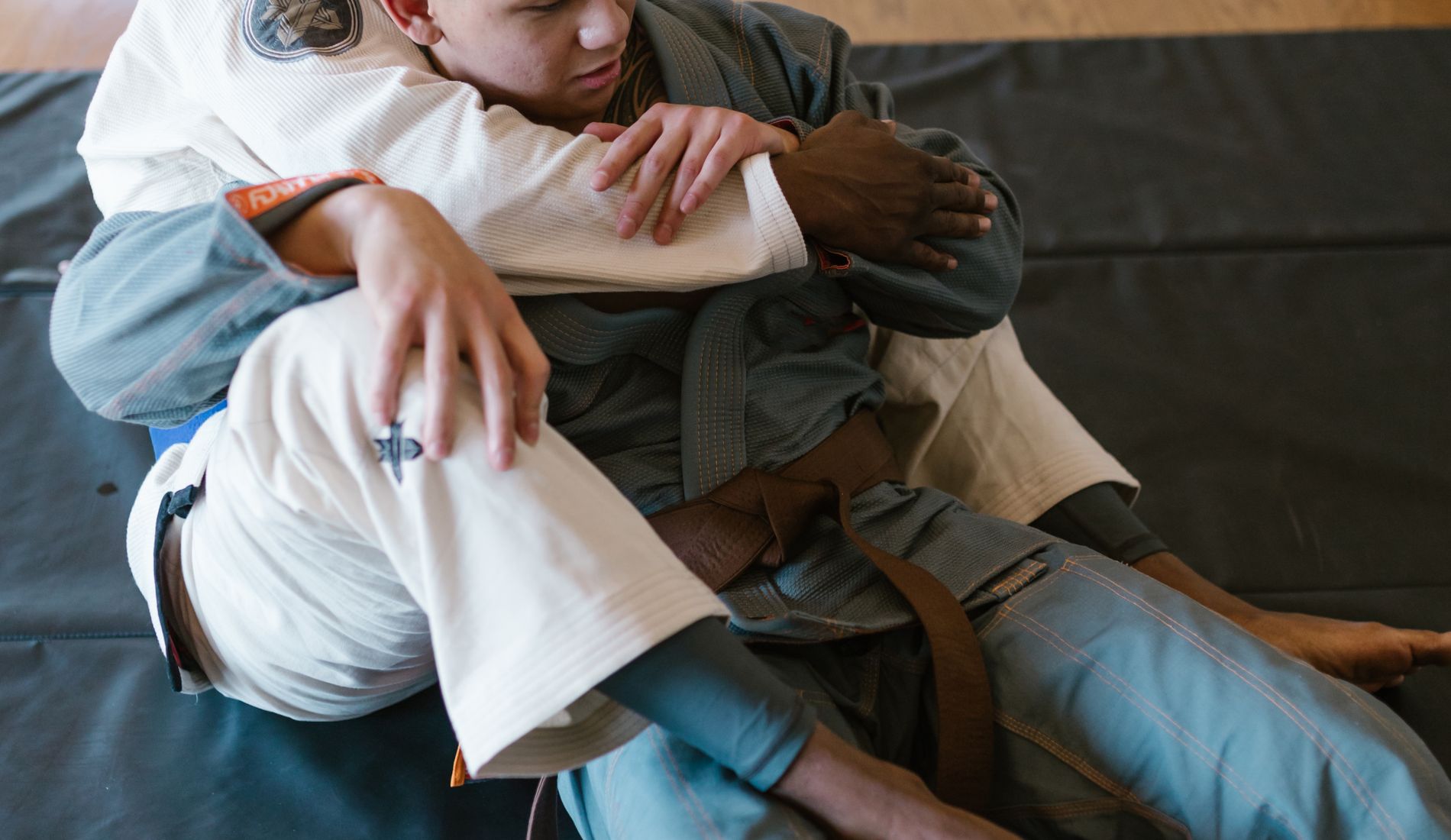
Here is where our bias lives, so we will back it with outside evidence. The American Academy of Pediatrics advises that children avoid martial arts that reward blows to the head, and that they should not start contact or competition until they are competent in non-contact technique. The Canadian Paediatric Society goes further on boxing: it opposes the sport for any child or teen, and notes that headgear has not been shown to prevent concussion. Grappling is not injury-free, and we will never tell you it is, but the injuries in kids' jiu-jitsu are bumps and sprains, not head trauma.
The confidence piece is subtler, and we want to be straight about it. The best-known study on martial arts and children's self-regulation was a school taekwondo program (Lakes and Hoyt, 2004), which found gains in focus, emotional control and classroom behaviour. A 2017 review of youth studies found martial arts training reduced aggression on average, while a 2026 review found the effect depends heavily on how a program is coached. The lesson we take from that: the art matters less than the room. A program that teaches respect, perseverance and a walk-away-first rule builds the child you want, whatever the uniform.
What jiu-jitsu adds is the daily rehearsal of staying calm under pressure. A kid pinned by a partner has two choices: panic, or breathe and work the escape they drilled. Do that twice a week and the calm starts to show up at school. We can walk you through your child's first class step by step.
Choose karate or taekwondo if this sounds like your kid
Some children are a better match for a striking art, and we will not pretend otherwise.
- They love solo mastery. Kata and poomsae reward a kid who wants to perfect a sequence alone, like piano scales.
- They want striking self-defence. Blocking and striking are real tools, and a good dojo teaches them with control.
- Frequent belt tests motivate them. Karate classes and taekwondo classes often promote every few months, which keeps some kids fired up.
- They dream of the Olympics. Taekwondo has been an Olympic sport since 2000. Karate is not currently on the program, and jiu-jitsu never has been.
- They are bouncy, not grabby. Some kids simply prefer to kick a pad than to wrestle. Trust that.
Any of those and another Stratford martial arts school may serve your family well. One place we will push back: for a child under 12, ask any striking program how they handle head contact in sparring, and listen for a clear answer.
How we train kids at Stratford BJJ
Stratford BJJ opened in December 2013 as the city's first jiu-jitsu academy, and more than 1,000 students have trained on our mats since. Our owner and head coach, Professor Ryan O'Shea, is a 3rd-degree black belt under Professor Jorge Britto in the Royler Gracie lineage and a founding member of the Jiu-Jitsu For Life Team. Every instructor who leads a kids class holds current First Aid and CPR, has cleared a Vulnerable Sector police check and carries NCCP Safe Sport certification.
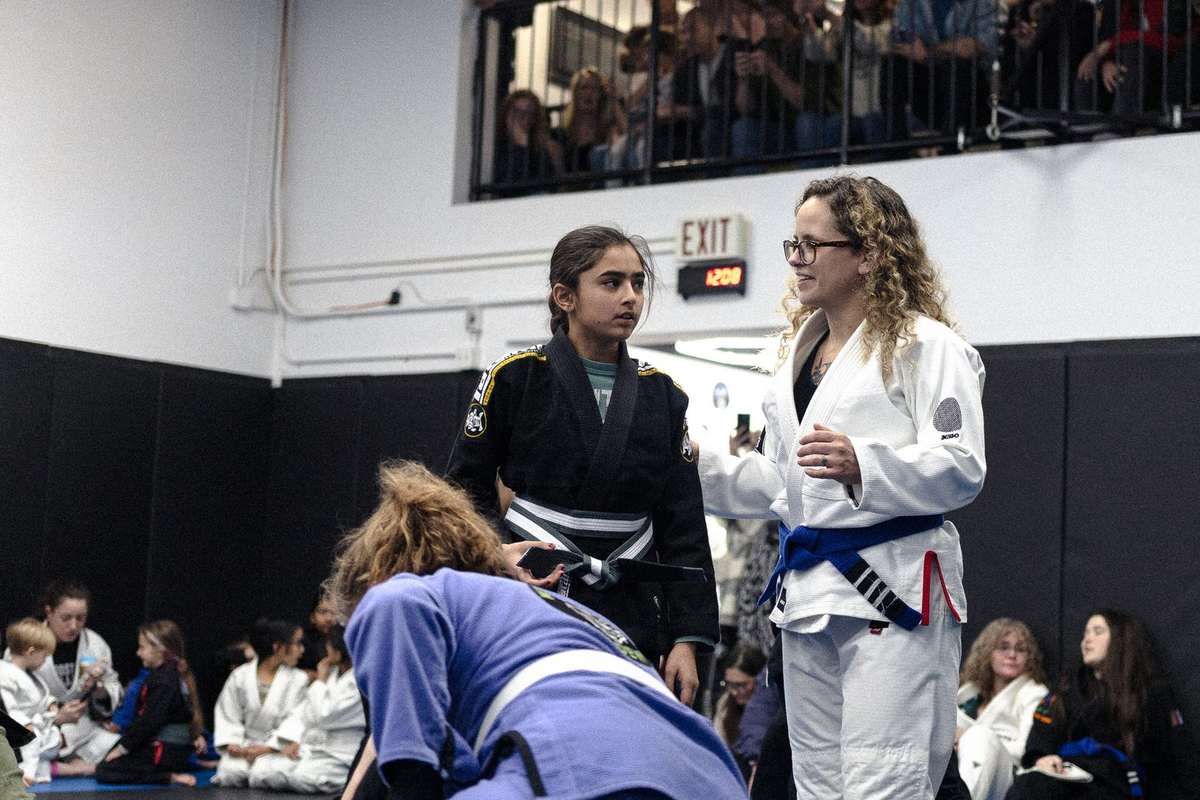
Kids classes are split by age, from Tots at four through Kids, Youth and Teens, and run weekday late afternoons plus Saturday mornings, with Kids and Youth Judo on Sundays. The full schedule is online. We are on Downie Street with free parking, so the drive works from across Perth County: about 10 minutes from Sebringville, 20 from St. Marys and 25 from Mitchell. Avon Maitland schools went back on 8 September, and families are locking in one after-school activity now. Only about 37 percent of Canadian kids meet the national activity guideline, so whichever art you pick, pick one.
Want to see it for yourself? The first class is free.
Book Your Free Intro Class →What Stratford families say
These are real Google reviews from people who train with us, quoted as they wrote them.
“The kids classes start from 4+years old and are an absolute riot to watch from the gallery!”Heather Clark, Google review
“Each session is meticulously structured, ensuring that everyone gets personalized attention and progresses at their own pace.”Sherry Kresky, Google review
“My son and I joined 6 weeks ago ... Excellent life lessons of a martial art in a very supportive atmosphere.”Glenn Armstrong, Google review
The only honest way to compare martial arts in Stratford is to watch your kid on the mat. Ready to see it for yourself? Book a free intro class and we will take it from there. Questions first? Reach us through the contact page or read about every age group on our programs page.
Frequently asked questions
Neither is better for every child. Brazilian jiu-jitsu suits kids who need calm and control, because it has no striking and rewards patience under pressure. Karate suits kids who love forms, solo drills and a fast belt ladder. Visit both and watch how the coach talks to the kids.
Most Stratford programs, including ours, take children from age four. At Stratford BJJ, four to six-year-olds train in a short, game-based Tots class, then move up through Kids, Youth and Teens groups. The first class is free, so you can test readiness without committing.
Bumps, mat burns and the odd sprain happen in any sport, and we will never promise zero risk. What jiu-jitsu removes is the head contact that paediatric bodies flag in striking sports. Kids learn to tap early, coaches supervise every round and classes are grouped by age.
For most children under 13, MMA programs keep striking and grappling in separate classes, and full mixed sparring is rare. Starting with jiu-jitsu gives your child the grappling half in a no-strike setting, and they can add striking later if they still want it.
This article is for general information only. Always train under qualified supervision and consult a physician before starting a new physical activity.