Gi vs no-gi BJJ is the question we hear most at the front desk this fall. ADCC 2026 in Krakow (12 to 13 September) crowned Felipe Pena the first two-time absolute champion in the event's history, and the IBJJF Pan No-Gi ran 2 to 4 October. People watched, got hooked and are now deciding which one to walk into first. Here is the straight answer, from an academy in Stratford that teaches both.
Gi vs no-gi BJJ: key differences between gi and no-gi at a glance
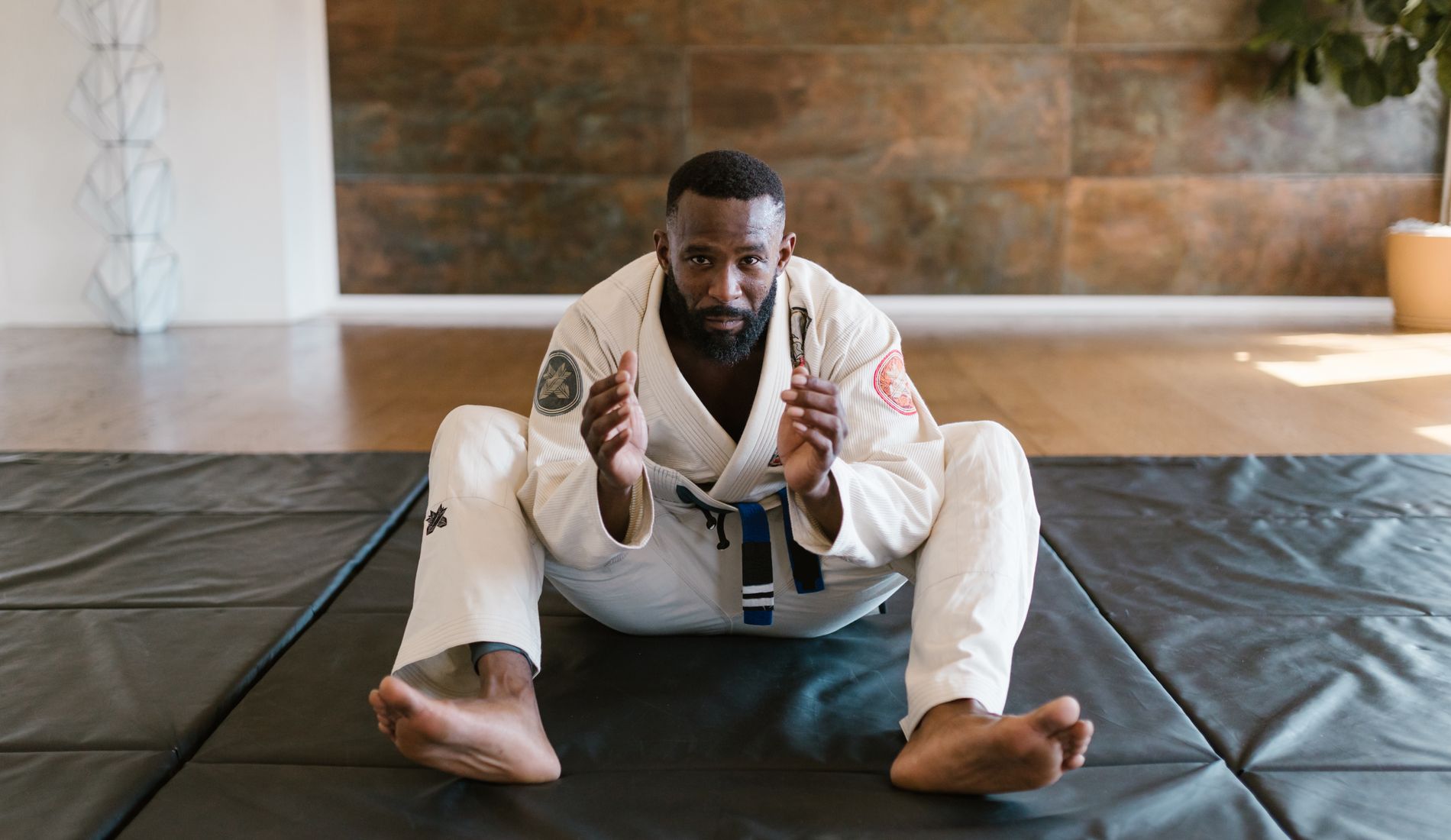
- Gi BJJ is trained in a gi, a heavy cotton jacket, pants and belt (sometimes called a kimono), and you can grip your partner's collar, lapel, sleeves and pants.
- No-gi BJJ is trained in a rash guard (a tight athletic shirt) and shorts, so every grip is on the body: wrists, neck, underhooks and overhooks.
- No-gi is faster and sweatier because nothing slows a scramble down, while gi training is slower and more methodical because grips hold everything in place.
- For a complete beginner, our answer is to start in the gi with BJJ Basics, then add No-Gi / Submission Wrestling once the fundamentals feel solid.
- At Stratford BJJ you can train gi and no-gi BJJ in the same week, and we lend a gi to newcomers for the free intro class.
What is the difference between gi and no-gi BJJ?
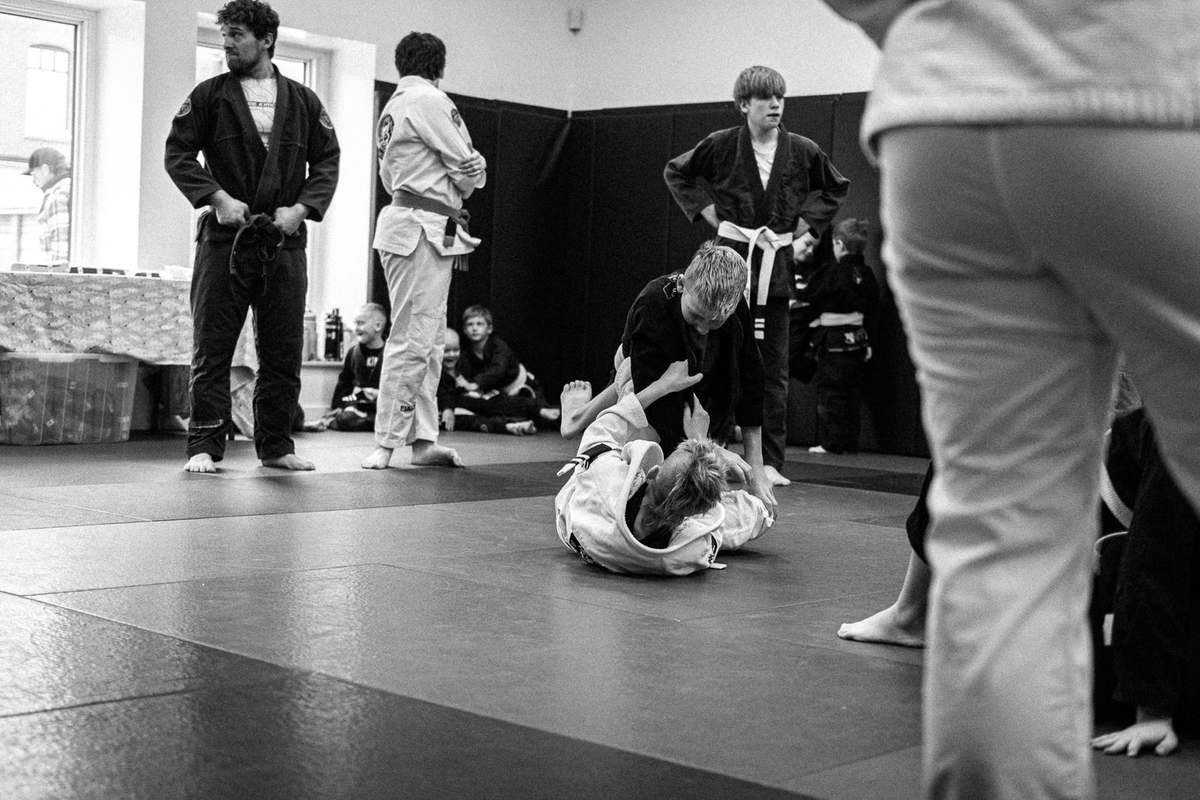
Same art, different uniform. Brazilian jiu-jitsu is grappling: no punches or kicks, just takedowns, positions and submissions (chokes and joint locks your partner taps to stop). The difference between gi and no-gi is what you are allowed to hold on to.
In the gi, the uniform itself becomes a tool. Gi grips on your opponent's gi let you control a partner with one hand, and the lapel can even be used to choke. Without the gi, those clothing grips disappear. You control the body directly, and the game gets looser and quicker.
| Comparison point | Gi BJJ | No-gi BJJ |
|---|---|---|
| What practitioners wear | Gi (cotton jacket, pants, belt) | Rash guard and shorts or spats |
| Main grips | Collar, lapel, sleeves, pants | Wrists, neck, underhooks, overhooks, body locks |
| Pace | Slower, more methodical | Faster, more scrambles |
| Friction | High, easy to hold position | Low, sweat makes everyone slippery |
| Chokes | Lapel and collar chokes plus body chokes | Body and arm chokes only |
| Closest cousin | Judo | Wrestling and MMA grappling |
Grip, speed and sweat: what changes in no-gi Brazilian jiu-jitsu
Grip is the big one. With a gi grip, you can hold a partner in place and think. In no-gi, a sweaty arm slides out of your hands, so you rely on head position, underhooks and tight body locks.
That changes the pace. No-gi rewards speed and athleticism, and a scramble that would stall in the gi keeps going. Gi BJJ rewards patience and technical precision, because a strong grip can shut down a fast athlete.
Some techniques stop working. Gi-specific techniques such as collar chokes, lapel guards and sleeve grips have no home in no-gi BJJ. Other techniques grow: leg locks and wrestling takedowns show up far more in no-gi. In IBJJF competition (the International Brazilian Jiu-Jitsu Federation, the sport's main rule body), the most dangerous leg locks, such as heel hooks, are kept for advanced adult belts at any tournament, so they are not something a beginner deals with.
Why train in gi and no-gi? What each one builds
Neither one is better. They build different things, and the best grapplers train both.
What training in the gi builds
- Defensive skills, because a skilled partner can hold you down with grips, so you learn to escape with good technique instead of strength.
- Patience and a deep understanding of Brazilian jiu-jitsu positions.
- Technical precision that carries straight over to no-gi training.
What no-gi training builds
- Wrestling, scrambling and a fast, athletic game.
- Grappling that fits MMA (mixed martial arts), since fighters do not wear a gi.
- Comfort with leg locks and body-lock control as you advance.
Does the gi make you better at no-gi? Most coaches say yes, because the gi forces you to fix your technique. The reverse is true too: no-gi sharpens your speed and your wrestling in the gi. A well-rounded skill set comes from learning to grapple both ways.
Gi or no-gi for a beginner, a former wrestler, an MMA fan and a teen
The complete beginner. Start in the gi. Wearing a gi for the first time feels strange for about a week, then it feels normal. Our BJJ Basics class runs the same format every session, and the gi slows things down enough to learn positions properly. You do not need to buy anything first: we lend gis to newcomers.
The former wrestler. No-gi will feel like home, and your takedowns and top pressure will show up on day one. Plenty of grapplers from Stratford, St. Marys and Mitchell come to us after high-school wrestling for exactly this. Our advice: take a few BJJ Basics classes first to learn guard (fighting from your back, which wrestling never teaches), then make No-Gi / Submission Wrestling your second class of the week and build your no-gi game from there.
The MMA fan. No-gi is the closest match to what you watch, so it makes sense to aim there. Start with the fundamentals in the gi for a few weeks, because the gi fills gaps that no-gi skips over.
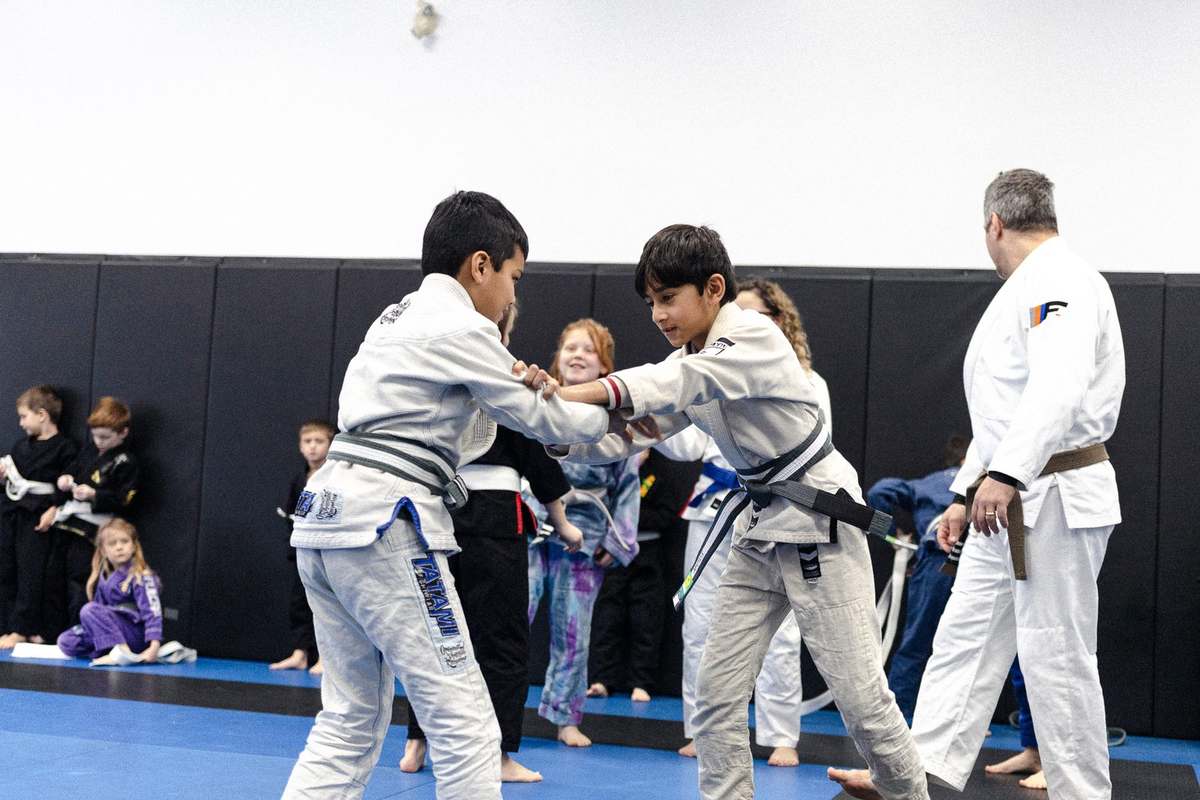
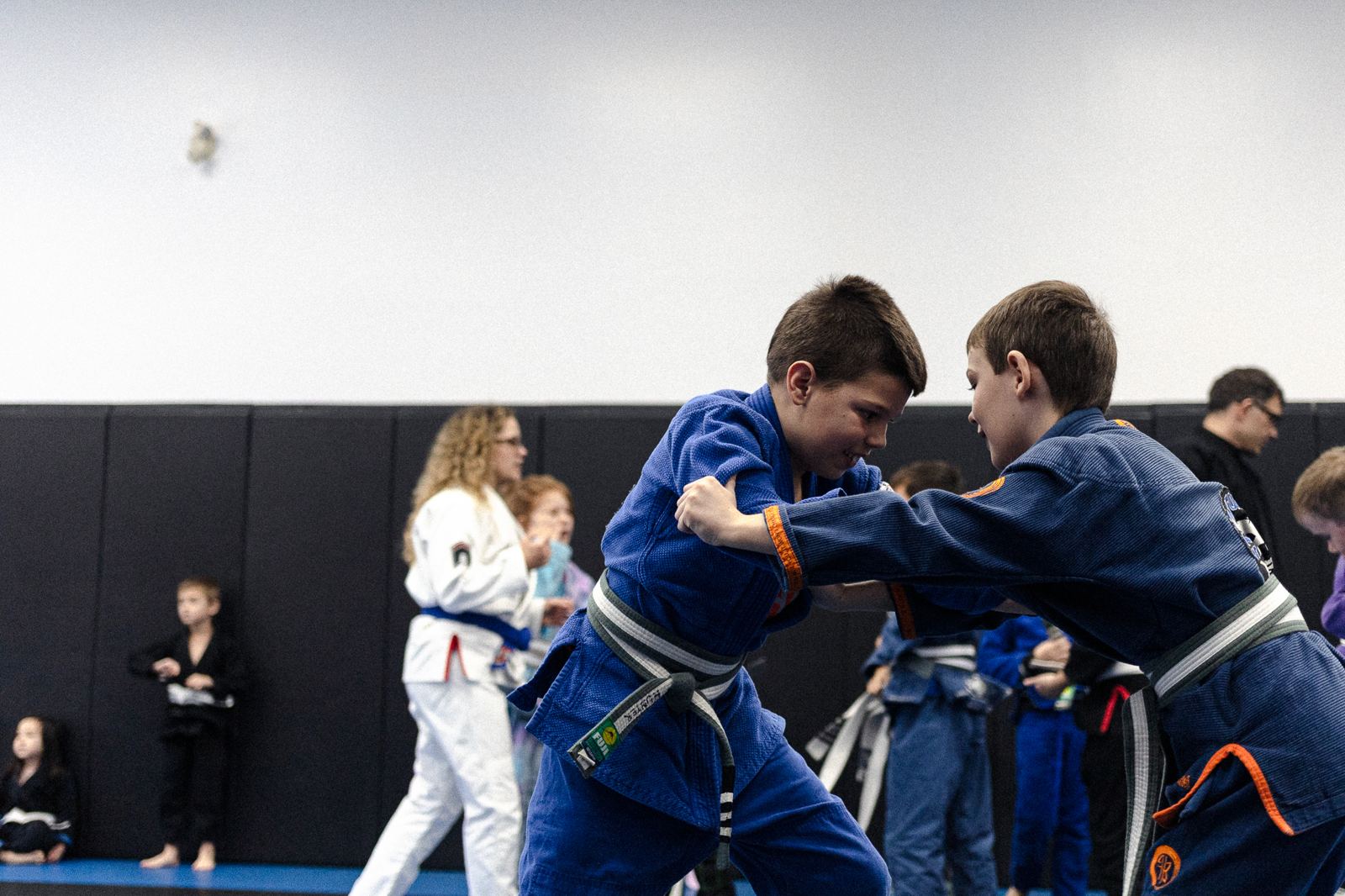
The parent picking for a teen. Our Teens and youth programs train in the gi, which builds patience and control at a safe pace. Teens who catch the bug can add no-gi as they progress. If your teen wrestles at school, tell us at the free intro class and we will point them to the right mix.
If this sounds like you, we can walk you through your first class step by step.
How we train both gi and no-gi BJJ at Stratford BJJ
We have taught jiu-jitsu in Stratford since December 2013, when Professor Ryan O'Shea opened the academy. Our head coach trains in the Royler Gracie line through Professor Jorge Britto and the Jiu-Jitsu For Life Team, and that lineage puts real weight on fundamentals in the gi. Read more about our story on the about page.
The two programs fit together. BJJ Basics (gi) runs Monday and Wednesday, with late-morning and evening classes. No-Gi / Submission Wrestling runs Monday, Wednesday and Friday evenings, plus Tuesday and Thursday late mornings. Check the full schedule for current times. Most members start in the gi, then add no-gi once the basics are second nature. You never have to pick one for good, and our coaches will help you find the right style for your goals in any of our BJJ classes.
Want to see it for yourself? The first class is free.
Book Your Free Intro Class →What members say about learning here
These are real Google reviews from people who train with us, quoted as they wrote them.
“Ryan (head instructor) took the time to personally show me some moves appropriate to my skill level (complete beginner) and broke it down into easy, understandable steps. When it came to rolling all the students were more than willing to help me ... There is no bravado and people rolled as hard or as light as they wanted.”Chris, Google review
“The classes cater to all levels, from complete beginners to advanced practitioners. Each session is meticulously structured, ensuring that everyone gets personalized attention and progresses at their own pace.”Sherry Kresky, Google review
Ready to step on the mats? Whether gi vs no-gi BJJ is still on your mind or you already know your answer, book a free intro class and we will take it from there. Questions first? Reach us through the contact page.
Frequently asked questions
Each is hard in its own way. Gi BJJ feels harder at first because grips let a partner pin you down, while no-gi feels harder on your lungs because the pace is faster. Most beginners find the gi easier to learn from.
Most beginners should start in the gi. It slows the game down and teaches positions and escapes that carry into no-gi. Former wrestlers can add no-gi sooner.
Usually, yes. Without clothing grips there is less to hold, so speed, strength and cardio matter more. Technique still wins, but athleticism shows up more in no-gi.
Both are useful. The gi teaches you to handle someone grabbing your clothes, like a jacket in a Canadian winter, and no-gi teaches control when there is nothing to grab. Training both gives you the widest range.
This article is for general information only. Always train under qualified supervision and consult a physician before starting a new physical activity.