The adult BJJ belt system runs white, blue, purple, brown and black, then degrees, coral and red. Kids use an expanded IBJJF order, white, grey, yellow, orange and green. Stripes mark progress between belts. Promotions are earned through technical understanding, mat hours and live application, not attendance alone.
The belt around your waist is the most visible part of Brazilian jiu-jitsu, and also the most misunderstood. New students often assume it works like other martial arts, show up, pass a grading, collect the next colour. BJJ does not work that way. The BJJ belt system is famously slow, deliberately hard to game, and at a good school it tells you something real about a person's jiu-jitsu. Here is how it actually works, after running an academy in Stratford since 2013.
What is the order of belts in BJJ?
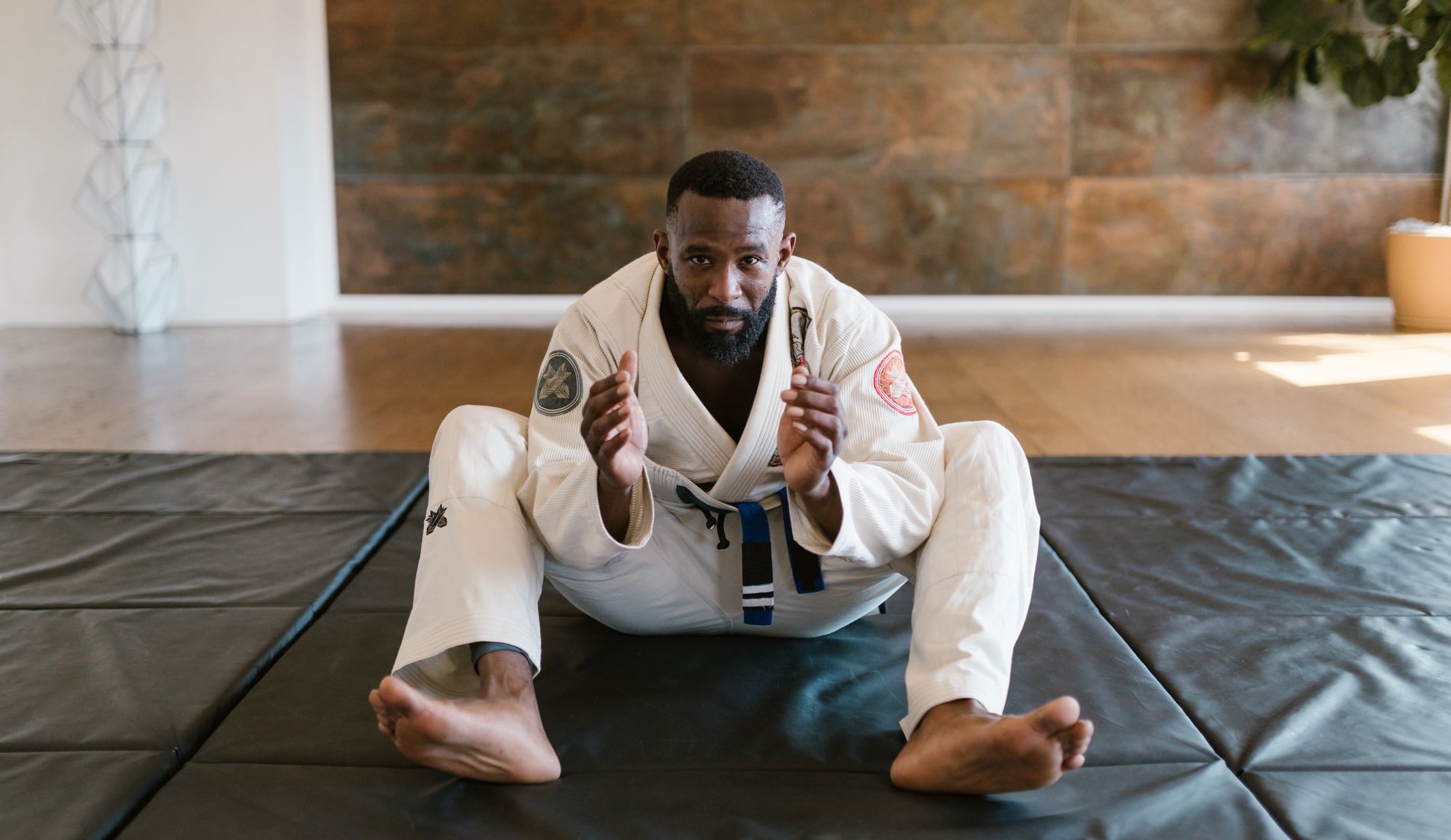
For adults the Brazilian jiu-jitsu ranking system has five main colours, awarded in a fixed order from white to black. Beyond black belt sit the degree ranks and the rare coral and red belts that mark a lifetime in the art. The full adult order looks like this:
The adult BJJ belt order, white to black
- White belt: the beginning. Survival, escapes and learning to stay calm under pressure
- Blue belt: a broad base of technique; you can defend yourself and have real offensive options
- Purple belt: the technician's belt; your game becomes personal and you start refining a style
- Brown belt: sharpening and polishing; few wasted movements, strong fundamentals under pressure
- Black belt: mastery of the fundamentals and the start of a deeper, lifelong study
- Degrees, then coral & red: black belts earn up to six degrees, then the red-and-black (7th) and red-and-white (8th) coral belts, and finally the red belt (9th and 10th degree) for the grandmasters
That last line surprises people: black belt is not the finish line. Most black belts will tell you it feels like the moment they finally understand how much there is left to learn. The coral and red belts above it represent decades of contribution to the art, the red belt is reserved for the founders and pioneers of Brazilian jiu-jitsu, such as the Gracie family.
What does each BJJ belt represent?
Each belt colour is less a trophy than a description of where your jiu-jitsu is. White belt is about not panicking, learning to breathe, escape bad positions and tap safely. Blue belt means you have a complete, if rough, game: you can pass, sweep, submit and survive. Purple belt is where students often start to feel like real jiu-jitsu players, building a personal style and beginning to teach others. Brown belt is refinement, the same techniques, but tighter, calmer and harder to stop. And black belt marks command of the fundamentals across the board, which is why it takes so long to reach.
What do the stripes on a BJJ belt mean?
Inside each belt colour are smaller markers called stripes. A belt can hold up to four stripes, and they exist because the jump between colours is so large that students need to see progress along the way. There is no universal rule for awarding them, your instructor uses them to recognise growth in technical understanding, mat hours and live application between promotions. As a rough guide, the fourth stripe usually means you are getting close to your next belt, though plenty of people stay at four stripes for a while before the colour changes.
How does the IBJJF kids belt system work?
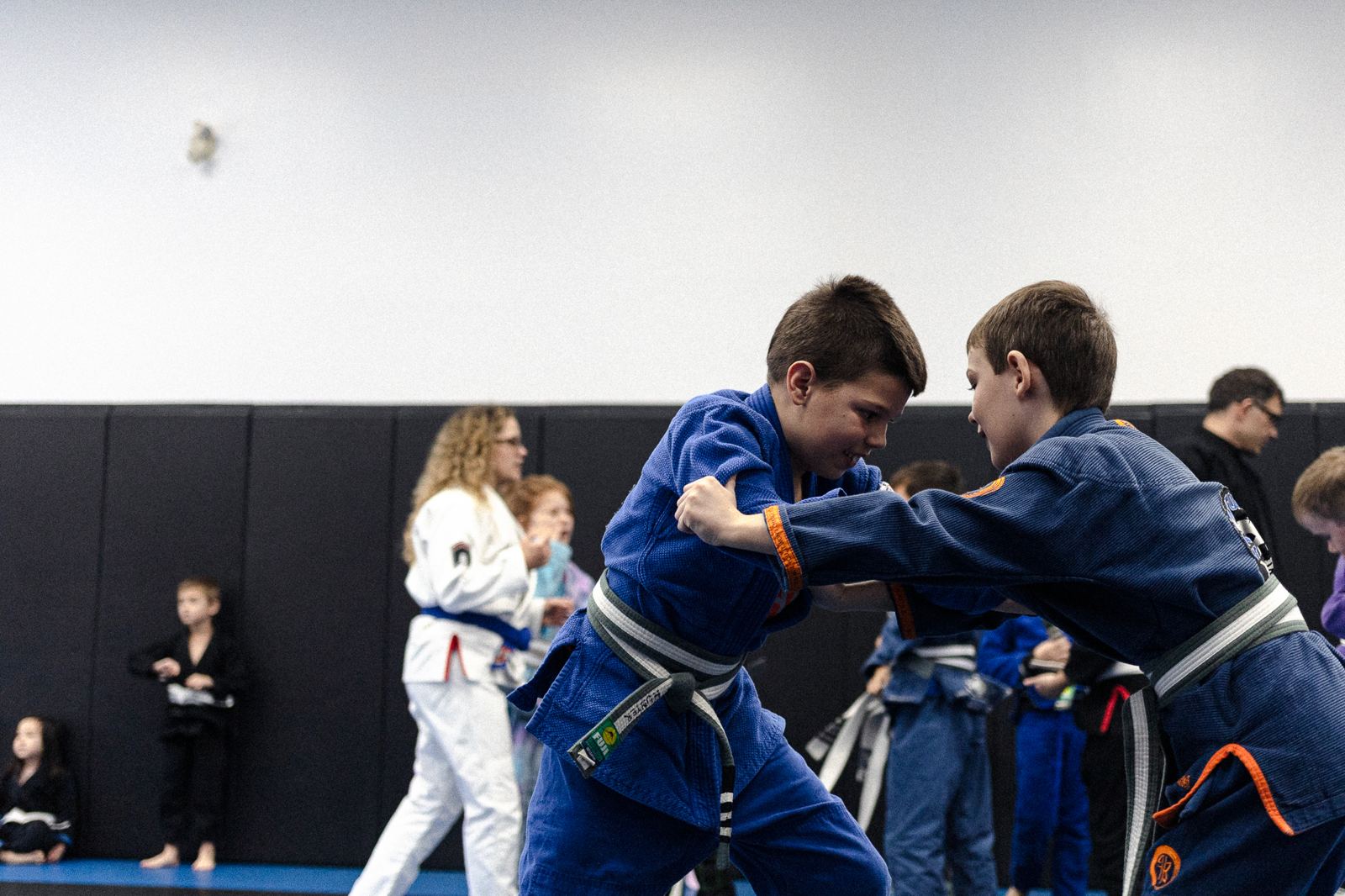
Children do not follow the adult colours. The International Brazilian Jiu-Jitsu Federation (IBJJF) uses a separate, expanded youth belt system because progress for kids is paced very differently. The youth order runs white, grey, yellow, orange and green, and each of those (except white) comes in white, solid and black variations, giving young students plenty of milestones to work toward.
The IBJJF kids belt order
- White: the starting belt for every young student
- Grey (white, solid, black): first foundations, for the youngest age groups
- Yellow (white, solid, black): building real positional skill
- Orange (white, solid, black): sharper technique and more live training
- Green (white, solid, black): the final youth stage before the adult belts
Why do kids have so many more belts? Because under IBJJF rules a child cannot be awarded an adult blue belt until they turn 16. Without the extra colours, a young student could spend many years on a single belt, so the youth system gives them frequent, earned milestones that keep training rewarding. At Stratford BJJ we group kids by age and stage to match these youth standards, so children are always learning with the right peers.
How long does it take to get each belt in BJJ?
This is the question every new student asks, and the honest answer is: longer than you think. There is no fixed timeline, and a thoughtful school will never promise one, but here is a realistic range based on consistent training a few times a week.
Rough, honest belt timelines
- White → blue: about 1 to 2 years
- Blue → purple: about 2 to 3 years
- Purple → brown: about 1.5 to 3 years
- Brown → black: about 1 to 2 years
- White → black belt: roughly 10 years of dedicated training
That ten-year figure is real, and it is one of the things that makes a BJJ black belt mean so much. The timeline is not a punishment: it simply reflects how long it takes to develop technique that holds up against a fully resisting partner. Training more often, rolling regularly and competing can move you through faster, but no one is fast-tracked past the work itself.
How are BJJ promotions actually earned?
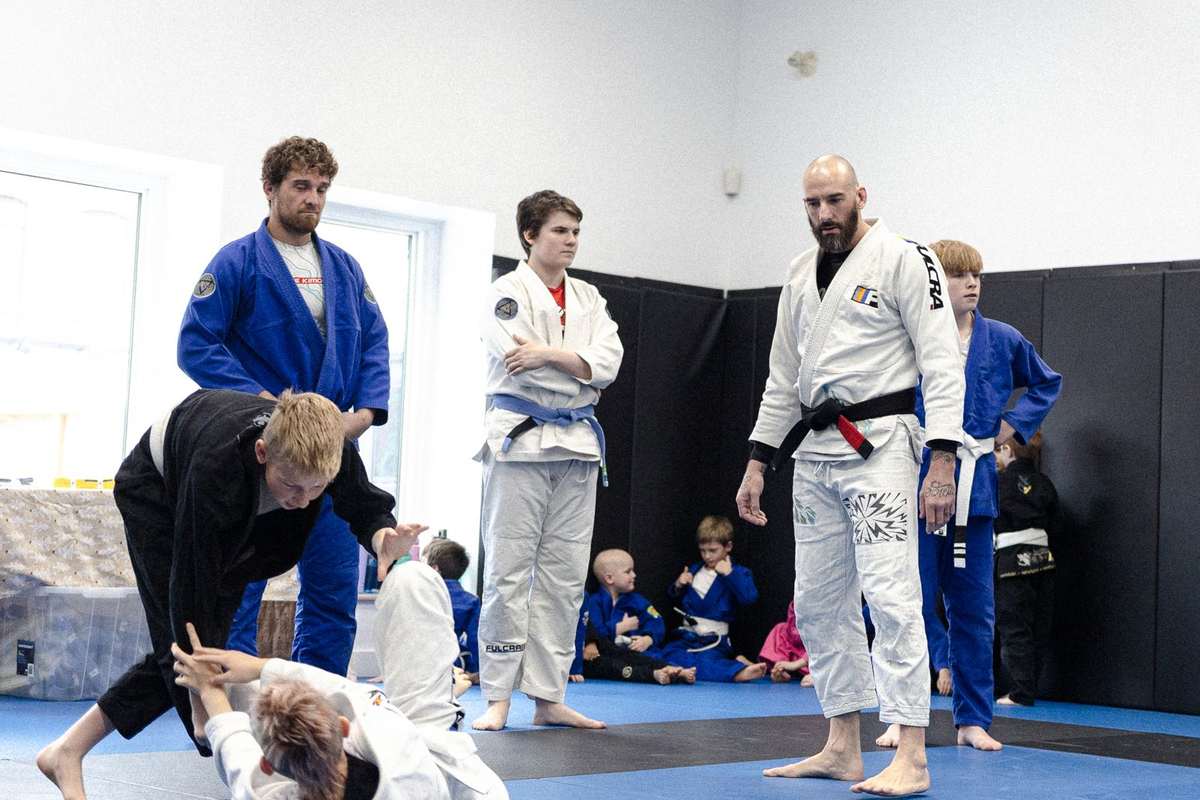
Unlike many martial arts, most BJJ academies have no formal grading exam. You will not sit a test on a set day. Instead your instructor watches you train over months and years, and promotes you when your jiu-jitsu is genuinely ready. At a good school three things matter most: technical understanding: you know the positions, the why behind them and how they connect; mat hours: consistent time spent training, drilling and rolling, not just attendance counted on a sheet; and live application: your technique works against a resisting partner, not only in drilling.
That is exactly how we do it at Stratford BJJ, promotions are based on technical understanding, mat hours and live application, never on how many classes you have ticked off. It is also why you should be wary of any school that promises a belt by a certain date or charges a grading fee for it. A belt that is given for showing up does not mean much; a belt that is earned on the mat means everything.
Want to start your own journey from white belt? The first class is free.
Book a Free Intro Class →Key takeaways
- The adult belt order is white, blue, purple, brown, black, then degrees, coral and red
- Kids use the expanded IBJJF order: white, grey, yellow, orange, green
- Stripes are progress markers between belts, up to four per colour
- Black belt takes around ten years of consistent training
- Promotions are earned through technical understanding, mat hours and live application, not attendance
Frequently asked questions
For adults the order is white, blue, purple, brown and black. After black belt come the degree ranks, then the coral belts, red and black at 7th degree, red and white at 8th, and finally the red belt at 9th and 10th degree, reserved for the founders and grandmasters of the art.
There is no fixed timeline, but as a rough honest guide most people spend one to two years at white belt, two to three years each at blue, purple and brown, and reach black belt after roughly ten years of consistent training. Training more often and rolling regularly speeds it up.
Stripes are smaller progress markers between belt colours. Each belt can hold up to four stripes, awarded as a student grows in technical understanding, mat hours and live application. Earning the fourth stripe usually signals you are getting close to the next belt.
No. The IBJJF youth belt system has more colours, white, grey, yellow, orange and green, each with white and solid variations, because progress is paced for children. A child cannot be awarded an adult blue belt until they are 16, so the extra belts keep them motivated through the younger years.
At a good school promotions are earned, not bought or timed. Instructors look at technical understanding, mat hours and live application, whether your jiu-jitsu actually works against a resisting partner, rather than attendance alone. There are no formal grading exams in most academies; your coach watches you train over time.