The BJJ belt system: how promotions actually work

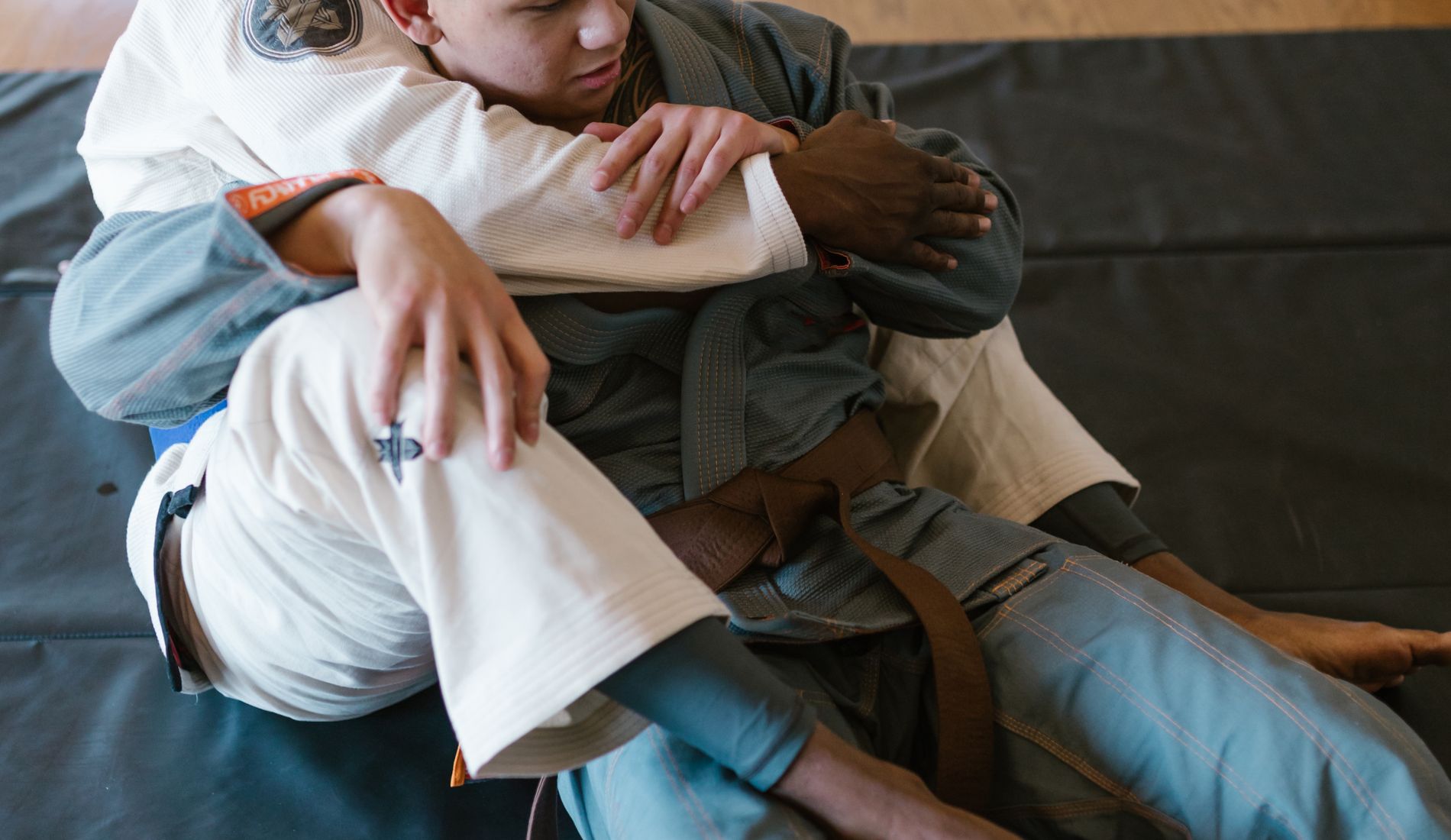
A coach tying a belt on a student at Stratford BJJ
Home / Blog / The BJJ Belt System
TrainingBelt System

The BJJ belt system: how promotions actually work

The honest version, the white-to-black adult order, what each belt represents, how the IBJJF kids belts differ, and how a good school really decides you are ready for the next one.

The short answer

The adult BJJ belt system runs white, blue, purple, brown and black, then degrees, coral and red. Kids use an expanded IBJJF order, white, grey, yellow, orange and green. Stripes mark progress between belts. Promotions are earned through technical understanding, mat hours and live application, not attendance alone.

The belt around your waist is the most visible part of Brazilian jiu-jitsu, and also the most misunderstood. New students often assume it works like other martial arts, show up, pass a grading, collect the next colour. BJJ does not work that way. The BJJ belt system is famously slow, deliberately hard to game, and at a good school it tells you something real about a person’s jiu-jitsu. Here is how it actually works, after running an academy in Stratford since 2013.

What is the order of belts in BJJ?

For adults the Brazilian jiu-jitsu ranking system has five main colours, awarded in a fixed order from white to black. Beyond black belt sit the degree ranks and the rare coral and red belts that mark a lifetime in the art. The full adult order looks like this:

The adult BJJ belt order, white to black

  • White belt: the beginning. Survival, escapes and learning to stay calm under pressure
  • Blue belt: a broad base of technique; you can defend yourself and have real offensive options
  • Purple belt: the technician’s belt; your game becomes personal and you start refining a style
  • Brown belt: sharpening and polishing; few wasted movements, strong fundamentals under pressure
  • Black belt: mastery of the fundamentals and the start of a deeper, lifelong study
  • Degrees, then coral & red: black belts earn up to six degrees, then the red-and-black (7th) and red-and-white (8th) coral belts, and finally the red belt (9th and 10th degree) for the grandmasters

That last line surprises people: black belt is not the finish line. Most black belts will tell you it feels like the moment they finally understand how much there is left to learn. The coral and red belts above it represent decades of contribution to the art, the red belt is reserved for the founders and pioneers of Brazilian jiu-jitsu, such as the Gracie family.

What does each BJJ belt represent?

Each belt colour is less a trophy than a description of where your jiu-jitsu is. White belt is about not panicking, learning to breathe, escape bad positions and tap safely. Blue belt means you have a complete, if rough, game: you can pass, sweep, submit and survive. Purple belt is where students often start to feel like real jiu-jitsu players, building a personal style and beginning to teach others. Brown belt is refinement, the same techniques, but tighter, calmer and harder to stop. And black belt marks command of the fundamentals across the board, which is why it takes so long to reach.

What do the stripes on a BJJ belt mean?

Inside each belt colour are smaller markers called stripes. A belt can hold up to four stripes, and they exist because the jump between colours is so large that students need to see progress along the way. There is no universal rule for awarding them, your instructor uses them to recognise growth in technical understanding, mat hours and live application between promotions. As a rough guide, the fourth stripe usually means you are getting close to your next belt, though plenty of people stay at four stripes for a while before the colour changes.

How does the IBJJF kids belt system work?

Children do not follow the adult colours. The International Brazilian Jiu-Jitsu Federation (IBJJF) uses a separate, expanded youth belt system because progress for kids is paced very differently. The youth order runs white, grey, yellow, orange and green, and each of those (except white) comes in white, solid and black variations, giving young students plenty of milestones to work toward.

The IBJJF kids belt order

  • White: the starting belt for every young student
  • Grey (white, solid, black): first foundations, for the youngest age groups
  • Yellow (white, solid, black): building real positional skill
  • Orange (white, solid, black): sharper technique and more live training
  • Green (white, solid, black): the final youth stage before the adult belts

Why do kids have so many more belts? Because under IBJJF rules a child cannot be awarded an adult blue belt until they turn 16. Without the extra colours, a young student could spend many years on a single belt, so the youth system gives them frequent, earned milestones that keep training rewarding. At Stratford BJJ we group kids by age and stage to match these youth standards, so children are always learning with the right peers.

How long does it take to get each belt in BJJ?

This is the question every new student asks, and the honest answer is: longer than you think. There is no fixed timeline, and a thoughtful school will never promise one, but here is a realistic range based on consistent training a few times a week.

Rough, honest belt timelines

  • White → blue: about 1 to 2 years
  • Blue → purple: about 2 to 3 years
  • Purple → brown: about 1.5 to 3 years
  • Brown → black: about 1 to 2 years
  • White → black belt: roughly 10 years of dedicated training

That ten-year figure is real, and it is one of the things that makes a BJJ black belt mean so much. The timeline is not a punishment: it simply reflects how long it takes to develop technique that holds up against a fully resisting partner. Training more often, rolling regularly and competing can move you through faster, but no one is fast-tracked past the work itself.

How are BJJ promotions actually earned?

Unlike many martial arts, most BJJ academies have no formal grading exam. You will not sit a test on a set day. Instead your instructor watches you train over months and years, and promotes you when your jiu-jitsu is genuinely ready. At a good school three things matter most: technical understanding: you know the positions, the why behind them and how they connect; mat hours: consistent time spent training, drilling and rolling, not just attendance counted on a sheet; and live application: your technique works against a resisting partner, not only in drilling.

That is exactly how we do it at Stratford BJJ, promotions are based on technical understanding, mat hours and live application, never on how many classes you have ticked off. It is also why you should be wary of any school that promises a belt by a certain date or charges a grading fee for it. A belt that is given for showing up does not mean much; a belt that is earned on the mat means everything.

Want to start your own journey from white belt? The first class is free.

Book a Free Intro Class

Key takeaways

  • The adult belt order is white, blue, purple, brown, black, then degrees, coral and red
  • Kids use the expanded IBJJF order: white, grey, yellow, orange, green
  • Stripes are progress markers between belts, up to four per colour
  • Black belt takes around ten years of consistent training
  • Promotions are earned through technical understanding, mat hours and live application, not attendance

Frequently asked questions

For adults the order is white, blue, purple, brown and black. After black belt come the degree ranks, then the coral belts, red and black at 7th degree, red and white at 8th, and finally the red belt at 9th and 10th degree, reserved for the founders and grandmasters of the art.

There is no fixed timeline, but as a rough honest guide most people spend one to two years at white belt, two to three years each at blue, purple and brown, and reach black belt after roughly ten years of consistent training. Training more often and rolling regularly speeds it up.

Stripes are smaller progress markers between belt colours. Each belt can hold up to four stripes, awarded as a student grows in technical understanding, mat hours and live application. Earning the fourth stripe usually signals you are getting close to the next belt.

No. The IBJJF youth belt system has more colours, white, grey, yellow, orange and green, each with white and solid variations, because progress is paced for children. A child cannot be awarded an adult blue belt until they are 16, so the extra belts keep them motivated through the younger years.

At a good school promotions are earned, not bought or timed. Instructors look at technical understanding, mat hours and live application, whether your jiu-jitsu actually works against a resisting partner, rather than attendance alone. There are no formal grading exams in most academies; your coach watches you train over time.

R

Reviewed by
Ryan O’Shea, Head Instructor, Stratford BJJ

Ryan is a 3rd-degree Brazilian jiu-jitsu black belt under Professor Jorge Britto in the Royler Gracie lineage, and founded Stratford BJJ in 2013. He has promoted students from white belt to black belt through the academy’s adult and youth programs.

/ Your First Class Is Free

Start at white belt.

Every black belt was once a nervous beginner on day one. One free class, no pressure and no experience needed. Come find out where your journey begins.

Book a Free Intro Class

Starting BJJ over 30, 40 or 50, not too late.

An adult beginner drilling Brazilian jiu-jitsu on the mats at Stratford BJJ
Home / Blog / BJJ for Beginners Over 30
For BeginnersStarting Over 30

Starting BJJ over 30, 40 or 50, not too late.

An honest answer for adults thinking about starting Brazilian jiu-jitsu later in life, am I too old, am I out of shape, will I get hurt, and what the first month actually looks like.

The short answer

No, you are not too old to start BJJ. Brazilian jiu-jitsu is built on leverage, timing and technique, not raw athleticism, so adults beginning in their 30s, 40s and 50s do well. You do not need to be in shape first. You get fit by starting, training smart and tapping early.

Almost every adult who walks into our academy in Stratford is carrying the same quiet worry: am I too old to start jiu-jitsu? Right behind it come the others, I am out of shape, I will get hurt, I will embarrass myself in front of the younger guys, my knees and back are not what they were. They are fair questions, and you deserve a straight answer rather than a sales pitch. Here is ours, after coaching adult beginners since 2013.

Is 40 years old too late to start BJJ?

No, and we mean that plainly. Forty is a completely normal age to begin, and the same goes for your 30s and 50s. The reason is the art itself: Brazilian jiu-jitsu is built on leverage and timing, not on being the strongest or fastest person in the room. A smaller, older, less athletic person who understands position will routinely control a younger, stronger beginner who does not. That is the whole point of the gentle art: it was designed so technique beats raw athleticism. The best time to start BJJ was years ago. The second-best time is this week.

You will not be alone, either. Walk into almost any BJJ academy on a weeknight and a big share of the adults on the mat began training in their 30s or later. Life experience is genuinely an asset here, older students tend to be patient, coachable and good at asking better questions, which is exactly how you learn jiu-jitsu fast.

Do I need to be in shape before I start?

No, and waiting until you are “ready” is the single most common reason adults never begin. You get in shape by starting, not before it. Our BJJ Basics fundamentals class is built for total beginners, so the warm-up, the drilling and the pace are all scaled to where you actually are on day one. Nobody expects you to be fit. Within a few weeks the cardio, mobility and functional strength come on their own, simply from showing up two or three times a week. Trying to get in shape first just delays the thing that gets you in shape.

Why “I’ll start when I’m fitter” backfires

  • BJJ is the workout: you build conditioning and functional strength on the mat, not on a treadmill beforehand
  • A fundamentals class is self-paced: drilling and warm-ups meet you where you are, not where a competitor is
  • Mobility improves with training: range of motion in your hips, shoulders and back tends to get better, not worse
  • The hardest part is the first class: fitness is never the barrier; getting on the mat is

Will I get hurt starting BJJ over 30?

Injury risk is real and worth respecting, but it is very manageable, far more so than most people fear. The first thing to know is that beginners do not spar on day one. You start with technique and positional drilling, and live rolling comes later, gradually, when you are ready. The second thing is the tap: you learn to tap early, at the first sign of pressure on a joint, long before anything is at risk. There is no medal for toughing out a submission, and the smart adults are the ones who tap the soonest.

Beyond that, protecting your joints, tendons and ligaments as an older beginner comes down to a few simple habits. Warm up properly. Stop at sharp pain, the kind that is different from ordinary soreness. Stay hydrated and let yourself recover between sessions. And tell a younger, stronger partner to ease off, a good training partner will, every round.

Train smart, stay injury-free

  • Tap early and often: protect your joints; ego-driven training is how people get hurt
  • Warm up and listen to your body: stop at sharp pain, push through ordinary soreness
  • Prioritise recovery: two to three sessions a week leaves time for your body to adapt
  • Pick your rounds: positional sparring with the right partner beats wild scrambles every time
  • Build slowly: strength training, mobility and balance work outside the gym all help longevity

What should beginners over 30 expect in the first month?

Honestly? You will feel clumsy, and that is completely normal. The first month of jiu-jitsu is a humbling, fascinating learning process for everyone: there is a lot of new vocabulary and your body is learning movements it has never made. You will be sore in places you did not know existed. You will get controlled by people half your size and wonder how. This is the part that makes adults quit, and it is also the part that, once you push through it, hooks people for life.

What helps most is mindset. Treat the first month as data-gathering, not testing. Show up, drill the fundamentals, ask questions and let the rest come. By week three or four the soreness eases, the movements start to click, and you begin to see why people who start later so often wish they had started sooner.

What are the benefits of starting BJJ after 30?

The benefits go well past self-defence, though that is real too. Adults who start training in their 30s and beyond consistently tell us the same things:

What adults gain from BJJ

  • Real fitness: cardio, functional strength and mobility, built through training rather than chores on a machine
  • Lower stress: hard focused training is a proven way to burn off nervous energy; many adults sleep better on training days
  • Confidence and calm: staying composed under pressure on the mat carries straight into the rest of life
  • Practical self-defence: control-based skills that work without throwing a punch
  • Community: a BJJ community of training partners is one of the best parts of adult life nobody warns you about
  • A skill that grows for decades: jiu-jitsu rewards longevity; you can train and improve for many years

Wondering if it is really for you? The first class is free.

Book Your Free Intro Class

How do I find the right BJJ gym as an adult beginner?

Not every academy is built for adults starting later. When you visit, look for a dedicated beginner or fundamentals class rather than being dropped straight into the deep end with competitors. Watch how the coaches teach, are adult beginners engaged and supported, or just surviving? Ask whether the mats are cleaned after every class, whether there is a clear curriculum, and whether you can try a class for free before committing. A good gym will welcome the question and let you watch a session first.

That is the standard we hold ourselves to at Stratford BJJ. Our adult fundamentals program, BJJ Basics: is built specifically for new adults, the free intro class lets you try before you decide, we lend you a gi so there is nothing to buy, and there are no contracts. You can start when you are ready, at the pace that suits you.

Key takeaways

  • You are not too old, BJJ is a leverage and timing art, so 30s, 40s and 50s all work
  • You do not need to be in shape first; you get fit by starting
  • Beginners do not spar on day one: you learn fundamentals and tap early to stay safe
  • The first month feels clumsy for everyone; push through and it clicks
  • Choose a gym with a real beginners class and a free trial, like our BJJ Basics program

Frequently asked questions

No. Forty is a completely normal age to start BJJ, and most academies are full of people who began training in their 30s, 40s and 50s. Because jiu-jitsu is built on leverage and timing rather than raw athleticism, you do not need to be young to learn it: you just train smart and tap early.

No. You get in shape by starting, not before. Trying to get in shape first is the most common reason adults never begin. Our BJJ Basics class is built for total beginners, with warm-ups and drilling scaled to where you are on your first day.

Injury risk is real but manageable. Beginners do not spar on day one, you learn to tap early at the first sign of pressure, and you control your own pace. Listen to your body, stop at sharp pain, warm up properly and most adults train for years injury-free.

Two to three sessions per week is the sweet spot for adults over 30, enough to build skill and a routine while leaving time to recover. Once a week still works when you are starting out, especially in the first month.

No. Everyone on the mat was a white belt who felt clumsy on day one, and a good BJJ community remembers that. In a beginner-only fundamentals class you train with other adult beginners, not with younger competitive guys, so there is nothing to prove.

R

Reviewed by
Ryan O’Shea, Head Instructor, Stratford BJJ

Ryan is a 3rd-degree Brazilian jiu-jitsu black belt under Professor Jorge Britto in the Royler Gracie lineage, and founded Stratford BJJ in 2013. He has coached hundreds of adults through their first nervous class and into years of training.

/ Your First Class Is Free

It is not too late.

One free class, no pressure and no experience needed. Come watch a session or step on the mat with our adult beginners, and see for yourself that you are right on time.

Book a Free Intro Class

BJJ for women: self-defence that actually works.

Two women training Brazilian jiu-jitsu together on the mats at Stratford BJJ
Home / Blog / BJJ for Women
For WomenSelf-Defence

BJJ for women: self-defence that actually works.

Why Brazilian jiu-jitsu is the most practical martial art for women, leverage and technique over size and strength, and how to start in a room that has your back.

The short answer

Brazilian jiu-jitsu is the most practical self-defence for women because it is built on leverage and technique, not size and strength. It teaches you to stay calm under pressure and control a bigger opponent from the ground, and Stratford’s Women’s-Only BJJ classes are a supportive place to start.

Most martial arts quietly assume you are the bigger, stronger person in the room. Brazilian jiu-jitsu assumes the opposite. It was designed so a smaller person could defend themselves against a larger, stronger attacker, which is exactly why it has become the go-to self-defence art for women. If you have ever wondered whether martial arts could genuinely keep you safe, this is an honest answer from a Stratford academy that has run a Women’s-Only program for years.

Is BJJ effective for women?

Yes, and not as a feel-good slogan. Brazilian jiu-jitsu is a grappling art built on leverage, position and technique. It does not reward whoever can hit hardest; it rewards whoever understands angles, weight and timing. That is why a woman who weighs 60 kilograms can learn to control, hold down and submit a partner who outweighs her by 30 or 40. The whole system is engineered around the size mismatch most women face in a real confrontation, which is what makes it genuinely effective self-defence rather than a workout that hopes for the best.

How does leverage beat size and strength?

This is the heart of it. In a striking art, a strength and reach advantage matters enormously. In jiu-jitsu, you learn to use the strongest parts of your body against the weakest parts of someone else’s, your hips and legs against an opponent’s neck, elbow or shoulder. You use the ground to take their balance away, frames to create space, and grips to steer where the fight goes. A bigger person’s strength becomes far less useful once they are off balance and their joints are exposed. You are not trying to overpower anyone. You are making their size work against them.

Why fight from the ground and off your back?

Many real confrontations end up on the ground, and for a smaller person that is often the most dangerous place to be, unless you know what to do there. BJJ flips that. From your back, in what we call the guard, you can control distance, defend yourself, and work toward escaping or ending the situation, all while a larger attacker tires themselves out. Learning to be comfortable and capable off your back is one of the biggest shifts women describe after training. The position that used to feel like the worst-case scenario becomes one where you have options.

What makes BJJ ideal self-defence for women

  • Leverage over strength: technique and position let a smaller person control a bigger one
  • Built for the ground: you learn to defend and escape from your back, not panic there
  • Calm under pressure: you practise problem-solving while someone is on top of you
  • No striking required: control and de-escalate without throwing a punch
  • Tested against resistance: every technique is pressure-tested with a partner who is really trying

How does BJJ keep you calm under pressure?

Self-defence is not only physical. The reason people freeze in a frightening moment is panic, and panic is what jiu-jitsu trains out of you. Every class, you spend time with a resisting training partner on top of you, breathing, thinking and working a way out. Over months that becomes second nature: the racing heart settles and you can act instead of freeze. Hard, focused physical training like this is also a proven way to burn off stress and lower cortisol, which is why so many women say BJJ left them feeling calmer and more capable far beyond the mat.

“I’d feel intimidated walking in”, and other honest worries

Almost every woman who trains with us felt some version of this before her first class. The worries are real and they are worth answering plainly:

The worries we hear most

  • “It looks intimidating.” Our Women’s-Only class is a calm, welcoming room of beginners learning together, not the scene you might be picturing.
  • “I’ll be the only woman there.” You won’t be. The whole point of the program is a community of women who train and support each other.
  • “I’ll get hurt.” No striking, a tap-early rule, and slow cooperative drilling. Controlled BJJ has lower injury rates than soccer or running.
  • “I’m not fit enough.” You don’t get fit to start: jiu-jitsu gets you fit. Every body type and age trains here.

If any of those sounds like the reason you have been putting it off, you are exactly who the Women’s-Only class was built for.

What is Stratford’s Women’s-Only BJJ program like?

Our Women’s-Only Brazilian jiu-jitsu classes run Tuesday and Thursday at 6pm, coached by Camila Villalobos Bieber. It is a supportive, beginner-friendly room, women of all ages, body types and fitness levels, training the same fundamentals curriculum we teach in every class. Nothing is watered down. You learn real, practical self-defence in a space designed to feel comfortable while you find your feet. As your confidence grows you are welcome to stay in Women’s-Only, move into our mixed classes, or do both. The first class is free, we lend you a gi, and there are no contracts to sign.

Curious whether BJJ is for you? Your first class is free.

Book a Free Women’s Class

What do women gain beyond self-defence?

Self-defence is what brings most women through the door; it is rarely what keeps them. The confidence that comes from knowing you can handle yourself spills into everything: work, relationships, how you carry yourself walking to your car at night. The fitness is real and it sneaks up on you, building strength, mobility and cardio without a single boring treadmill session. And then there is the community: a welcoming group of women who genuinely support each other’s progress. A lot of members tell us the friendships are the part they did not expect and would not give up.

Key takeaways

  • BJJ is the most practical self-defence for women: leverage and technique beat size and strength
  • You learn to fight from the ground and off your back, and to stay calm under pressure
  • No striking, a tap-early rule and slow drilling make it safe for beginners
  • Stratford’s Women’s-Only BJJ runs Tue and Thu at 6pm, all ages and body types welcome
  • Same fundamentals as mixed classes, so you can move into them when you’re ready

Frequently asked questions

Yes. Brazilian jiu-jitsu is built on leverage, technique and position rather than size and strength, so a smaller woman can control and submit a bigger, stronger opponent. It is widely considered the most practical self-defence martial art for women because it is designed for exactly that situation.

No. Most women in our Women’s-Only classes start as complete beginners. The fundamentals curriculum begins from the very first movement, you train with patient partners at your own pace, and we lend you a gi for your first class.

BJJ is grappling with no striking: nobody punches or kicks. You learn to tap the moment anything feels uncomfortable, and the class stops there. Controlled jiu-jitsu has lower injury rates than running, soccer or hockey, and beginners drill at a slow, cooperative pace.

No. You do not get in shape to start jiu-jitsu: jiu-jitsu gets you in shape. Women of all ages, body types and fitness levels train with us. You move at your own pace and your cardio, strength and mobility build naturally as you go.

Yes. The Women’s-Only program teaches the same fundamentals as our mixed classes, so when you feel ready you can train alongside everyone. Many women keep doing both: Women’s-Only for comfort and community, mixed classes for variety.

R

Reviewed by
Ryan O’Shea, Head Instructor, Stratford BJJ

Ryan is a 3rd-degree Brazilian jiu-jitsu black belt under Professor Jorge Britto in the Royler Gracie lineage, and founded Stratford BJJ in 2013. He has coached hundreds of adults, beginners and competitors alike, through the academy’s programs.

/ Your First Class Is Free

See it for yourself.

One free class, no pressure and no experience needed. Come watch our Women’s-Only class or step on the mats and try it. Tuesdays and Thursdays at 6pm.

Book a Free Women’s Class

Gi vs no-gi BJJ: where should a beginner start?

Two students training Brazilian jiu-jitsu in the gi at Stratford BJJ
Home / Blog / Gi vs No-Gi BJJ
TrainingGi vs No-Gi

Gi vs no-gi BJJ: where should a beginner start?

A plain-English comparison from Stratford’s original jiu-jitsu academy, what each style actually is, the honest pros and cons, and why we start every new student in the gi.

The short answer

Start in the gi. For most beginners the gi is the better place to learn, because the slower pace and the grips on the jacket and collar give you time to feel each position and build real technique. That foundation transfers straight into no-gi later, so you lose nothing by starting in the traditional uniform.

It is one of the most common questions we get from people about to try Brazilian jiu-jitsu: should I train gi or no-gi? Both are the same art at heart, leverage, position and submissions, but they look and feel different on the mat, and the difference between gi and no-gi matters more than most beginners expect. Here is an honest comparison, and where we think a new student should start.

What is gi BJJ?

Gi BJJ is the traditional form of Brazilian jiu-jitsu. You wear a gi: a heavy cotton jacket, trousers and a coloured belt, sometimes called a kimono, and the fabric is part of the game. You grip your opponent’s collar, sleeves and lapels to control them, set up sweeps, and finish chokes and armlocks. Because those grips let a person hold and stall you, the gi rewards patience and precision over speed. It is slower, more technical, and the style used in most traditional academies and IBJJF tournaments.

What is no-gi BJJ?

No-gi BJJ, also called submission wrestling, is trained in a rash guard and shorts with no jacket to grab. With no clothing grips, the game gets faster and slipperier, and it leans more on wrestling: underhooks, overhooks, body locks and head control instead of collar and sleeve. No-gi also opens up leg locks and heel hooks that gi rules often restrict, and its speed and lack of grips make it the version closest to mixed martial arts. It rewards athleticism, scrambling and tight body-to-body control.

What is the difference between gi and no-gi BJJ?

The simplest way to see it is side by side. The gi gives both people lots of handles, which slows everything down and makes technique king; no-gi takes those handles away, which speeds everything up and rewards movement.

Gi vs no-gi at a glance

  • What you wear: gi: cotton jacket, trousers and belt · no-gi: rash guard and shorts
  • Grips: gi: collar, sleeves and lapels · no-gi: underhooks, body locks and head control
  • Pace: gi: slower and more deliberate · no-gi: faster and sweatier
  • Submissions: gi: collar chokes and gi-specific grips · no-gi: more leg locks and heel hooks
  • Feels like: gi: technical chess · no-gi: athletic wrestling

Neither is “better.” They are two angles on the same skill set, and most experienced grapplers train both.

What are the pros and cons for a beginner?

For someone brand new, the gi has a real teaching advantage. The grips give you something to hold while you think, the slower pace lets you feel a position before it changes, and being controlled by an opponent’s grips forces you to learn proper escapes rather than muscling out. The trade-off is that the gi can feel hot and frustrating at first, and there is a uniform to buy once you join. No-gi is more beginner-friendly in one way: there is less to learn about grips on day one, but its speed can overwhelm a newcomer, and without handles it is easy to fall back on strength instead of technique. For building a foundation, the gi usually wins.

Why does Stratford BJJ start beginners in the gi?

Every new student at Stratford BJJ starts in our gi-based BJJ Basics program, and that is a deliberate choice. The gi slows the game down enough that you can actually learn, and because your opponent can grip and stall you, you cannot rely on speed or strength to escape a bad spot. You are forced to do it with technique. Those clean fundamentals are the hardest thing to build and the most valuable thing to own, and they carry directly into no-gi when you are ready. Start sloppy and fast, and you spend years unlearning bad habits; start in the gi, and you build a foundation that holds up everywhere.

Should you train both gi and no-gi?

Eventually, yes, and most of our members do. Training both makes you a well-rounded grappler: the gi sharpens your precision and patience, while no-gi sharpens your speed, scrambling and body control. Once your fundamentals are solid in the gi, our NoGi / Submission Wrestling classes are the natural next step, and the two complement each other so well that progress in one tends to lift the other. You do not have to choose forever: you just have to choose where to start.

What do you wear for each?

For your very first class you do not need either, just comfortable athletic clothes and a water bottle, and we lend you a gi so there is nothing to buy before you try it. Once you join, you will want your own gi for BJJ Basics (a clean cotton jacket, trousers and belt) and a rash guard and shorts for no-gi. Train barefoot, keep your nails trimmed, and you are set for both.

Not sure which is for you? Try a class free.

Book a Free Intro Class

Key takeaways

  • Gi BJJ uses a cotton jacket and grips; it is slower and more technical
  • No-gi BJJ is trained in a rash guard and shorts; it is faster and leans on wrestling and leg locks
  • Beginners learn best in the gi: it builds precise, transferable technique
  • Stratford BJJ starts every new student in gi-based BJJ Basics for that reason
  • Train both over time to become a well-rounded grappler

Frequently asked questions

Most beginners should start in the gi. The slower pace and the grips on the jacket and collar give you time to feel each position and learn the technique properly. That technical foundation transfers straight into no-gi later, which is why we start every new student in our gi-based BJJ Basics program.

Neither is harder overall, but they are hard in different ways. The gi is slower and more technical, with grips that let your opponent control and stall you. No-gi is faster and sweatier with fewer handles, so it rewards speed, scrambling and tight body control. Beginners usually find the gi easier to learn on.

In gi BJJ you wear a heavy cotton jacket, trousers and a belt, and you grip the fabric, collar, sleeves and lapels, to control and submit your opponent. No-gi BJJ is trained in a rash guard and shorts with no fabric to grab, so it is faster and leans on wrestling, underhooks, body locks and leg locks.

Yes. The gi forces precise technique because your opponent can grip and stall you, so you cannot rely on speed or strength to escape a bad position. Those clean fundamentals carry directly into no-gi, where they make you sharper and harder to hold down.

For your first class just bring comfortable athletic clothes and a water bottle. We lend you a gi so there is nothing to buy before you try it. Once you join, you will want your own gi for BJJ Basics and a rash guard and shorts for no-gi.

R

Reviewed by
Ryan O’Shea, Head Instructor, Stratford BJJ

Ryan is a 3rd-degree Brazilian jiu-jitsu black belt under Professor Jorge Britto in the Royler Gracie lineage, and founded Stratford BJJ in 2013. He has coached hundreds of students through the academy’s gi and no-gi programs.

/ Your First Class Is Free

Come feel the difference.

One free class, no pressure and no experience needed. We will get you in a loaner gi, walk you through the basics and let you see why we start everyone here.

Book a Free Intro Class

Is Brazilian Jiu-Jitsu good for kids?

A child learning Brazilian Jiu-Jitsu with a coach at Stratford BJJ
Home / Blog / Is BJJ Good for Kids?
For ParentsKids BJJ

Is Brazilian Jiu-Jitsu good for kids?

An honest answer from Stratford’s original jiu-jitsu academy, what the benefits really are, whether it is safe, and what parents notice after a few months.

The short answer

Yes, Brazilian jiu-jitsu is one of the best martial arts for kids. It builds confidence, focus and discipline through safe, no-strike grappling, gives children practical anti-bullying skills, and burns off energy in a structured, supervised class. Most Stratford parents notice a calmer, more focused child within a few months.

Every week a parent walks into our academy in Stratford and asks some version of the same question: is BJJ actually good for my kid? Usually they are weighing it against hockey, soccer or another martial art, and they want a straight answer, not a sales pitch. Here is ours, after running youth jiu-jitsu programs since 2013.

Is BJJ safe for children?

This is the first thing every parent asks, and it is the right question. Brazilian jiu-jitsu is a grappling art: leverage, control and position, with no striking. Nobody punches or kicks. Children learn to “tap” the moment anything feels uncomfortable, and the class stops there. Add small coach-to-kid ratios, age-appropriate technique, two-plus adults on the mat and clean, sanitised mats, and you have a sport with lower injury rates than soccer, hockey or running. The first thing we teach a child is how to fall safely and how to tap, before anything else.

What are the benefits of BJJ for kids?

The benefits go well beyond fitness. Because progress on the mat is earned one small step at a time, jiu-jitsu quietly teaches children that effort pays off. Here is what we see again and again:

What BJJ builds in kids

  • Confidence that is earned, not handed out, from solving real problems against a resisting partner
  • Focus and discipline that follow them home and into the classroom
  • Coordination, balance and fitness through an hour of genuine physical activity
  • Self-defence that works without throwing a punch
  • Friendship and a supportive community of kids who train and grow together
  • Emotional control: staying calm under a little pressure is a life skill

Those last points matter most to parents. A child who learns to stay composed when an opponent is on top of them tends to stay composed when a test, a sibling or a schoolyard situation gets stressful.

Does BJJ help with bullying?

Yes, and not in the way people expect. We teach kids to be bully-resistant, not bully-creating. The rule on our mats is simple: use your words first, walk away when you can, find an adult, and only ever use jiu-jitsu to protect yourself. Because BJJ is control-based, a trained child can keep themselves safe and de-escalate a situation without hurting anyone. Parents consistently tell us the bullying stopped being a problem, partly because the skills work, and mostly because the quiet confidence is obvious to everyone around them.

Does BJJ really help kids manage stress?

It does. Hard physical activity that demands total attention is a proven way to burn off nervous energy and lower stress hormones like cortisol, and it is very hard to worry about anything else when you are problem-solving on the mat. For high-energy kids, and for many kids with ADHD, that combination of structure, movement and focus is exactly what helps. They leave class tired in the best way, and a lot of parents notice better sleep and a calmer evening at home.

What age can a child start BJJ?

Children can start as young as four. At Stratford BJJ we group kids by age and stage so they are always learning with the right peers, never thrown in with teenagers:

Our kids programs

  • Tots (ages 4–6): games, movement and confidence; coordination over competition
  • Kids (ages 6–9): a strong foundation of positions, escapes and anti-bullying skills
  • Youth (ages 10–12): real technique, drilling and the option to compete
  • Teens (ages 13–15): the bridge into adult training

If you are wondering whether to put a four-year-old in jiu-jitsu, the honest answer is that the Tots class is built for exactly that, short, fun and game-driven, with no pressure.

What do Stratford parents notice after a few months?

The on-the-mat skills come quickly, but the changes parents mention first happen off the mat. After two or three months of training twice a week, the most common things we hear are: their child is calmer and more focused at home, more confident with new people, and the one that surprises parents most: a teacher has asked what changed. That is the real return on a kids martial arts program: a child who listens better, bounces back faster and believes they can handle hard things.

How do you choose a good kids BJJ school?

Not every academy is the same. When you visit, watch how the instructors talk to the kids, are children engaged and participating, or just being managed? Ask whether coaches are background-checked and first-aid certified, whether the mats are cleaned after every class, and whether there is a clear curriculum and belt progression rather than “show up and roll.” A good school will happily let you watch a class and try one for free before you enrol. (Those are the same standards we hold ourselves to.)

Curious whether your child will love it? The first class is free.

Book a Free Kids Class

Key takeaways

  • BJJ is safe: no strikes, a tap-early rule, and lower injury rates than most team sports
  • It builds confidence, focus, discipline and real self-defence
  • It is genuinely anti-bullying: walk away first, protect yourself without hurting anyone
  • Kids can start at four; classes are grouped by age and stage
  • Most parents notice calmer, more focused kids within a few months

Frequently asked questions

Yes, ages 4 to 6 is a great time to start in a Tots program. At this age BJJ is taught through games that build coordination, balance and listening, with no submissions and plenty of supervision. It is about confidence and fun, not competition.

No. BJJ is a control-based grappling art with no striking, and we teach a strict walk-away-first rule. Kids learn to defend themselves and stay calm, academies that teach jiu-jitsu consistently report it makes children less likely to fight, not more.

Twice a week is the sweet spot for most kids, enough to build skill and routine without burning out. Once a week still delivers real benefits, especially when they are just getting started.

Many parents of high-energy kids and kids with ADHD find BJJ especially helpful. The structure, clear progression and physical activity give them a productive outlet, and the focus required on the mat often carries over to school and home.

Just comfortable athletic clothes, a water bottle and bare feet. We lend a gi for the first class, so there is nothing to buy before you try it.

R

Reviewed by
Ryan O’Shea, Head Instructor, Stratford BJJ

Ryan is a 3rd-degree Brazilian jiu-jitsu black belt under Professor Jorge Britto in the Royler Gracie lineage, and founded Stratford BJJ in 2013. He has coached hundreds of kids through the academy’s youth programs.

/ Your Child’s First Class Is Free

See it for yourself.

One free class, no pressure and no experience needed. Come watch a kids class or let them jump in, and see the difference for yourself.

Book a Free Kids Class

Is Brazilian jiu-jitsu safe?

Controlled Brazilian jiu-jitsu training on clean mats at Stratford BJJ
Home / Blog / Is Brazilian Jiu-Jitsu Safe?
SafetyInjury Risk

Is Brazilian jiu-jitsu safe?

An honest, balanced look at the injury risk in BJJ, what can go wrong, what almost never does, and how a good academy keeps training safe for kids and adults alike.

The short answer

Yes, Brazilian jiu-jitsu is one of the safer contact activities you can do. There is no striking, a partner can tap to stop any position instantly, and most training is controlled drilling. Injuries do happen, but they are usually minor, and BJJ’s injury rate is lower than many team sports like soccer or hockey.

If you are thinking about trying jiu-jitsu, or putting your child in it, “is it safe?” is the honest first question, and it deserves an honest answer. Brazilian jiu-jitsu is a grappling martial art built on leverage, control and position. There are no punches and no kicks. That single fact removes the source of most serious injuries in combat sports. But no physical activity is risk-free, so here is a straight, balanced look at what the real risks are, how common injuries actually happen, and what a good academy does to keep them rare.

Is Brazilian jiu-jitsu generally safe to practise?

For most people, yes. Studies of martial arts and combat sports consistently place BJJ among the safest grappling arts, well below striking-based disciplines like boxing or Muay Thai. The reason is structural: in jiu-jitsu, the goal is to control a resisting partner and earn a submission through technique and leverage, not to hurt them. The moment a submission is locked in, the person on the receiving end taps, and the round stops. Compare that to a sport built on collisions or full-contact blows, and it is easy to see why BJJ injuries tend to be fewer and milder.

What are the most common injuries in BJJ?

Being honest means naming the risks. The injuries we see most often are minor and the kind any active person picks up. The serious ones are uncommon and almost always preventable.

Common BJJ injuries: most of them minor

  • Jammed or sprained fingers: the most common complaint, from gripping the gi
  • Sore knees and tweaked shoulders: usually from drilling volume, not trauma
  • Strains and bruises: the ordinary wear of any contact activity
  • Skin issues: possible on neglected mats, but easily prevented with good hygiene
  • Joint or neck injuries: rare, and usually tied to holding a submission too long or refusing to tap

Notice what is not on that list in any meaningful number: concussions and head trauma. Because there is no striking, head injuries are far less of a concern in BJJ than in most contact sports. The most serious injuries that do occur almost always trace back to a single avoidable cause, ego, which brings us to the system that prevents them.

What safety mechanisms are built into BJJ training?

Jiu-jitsu has a safety valve that most sports simply do not: the tap. When a submission is applied (an armlock, a choke, a shoulder lock), the person caught taps the mat, their partner or themselves, and the technique is released immediately. Tapping is not losing. It is how everyone trains hard for years and stays healthy. The first thing we teach a new student at Stratford BJJ, before any submission, is how to fall safely and how to tap early.

Why the tap keeps BJJ safe

  • You control your own safety: one tap stops the round, instantly, every time
  • Tap early, not late: tapping the moment a position is locked, not at the last second, is what prevents joint injuries
  • No ego on the mat: good academies build a culture where tapping is normal and respected, not mocked
  • Controlled drilling: most class time is cooperative practice at low intensity, not all-out sparring

How does BJJ compare to other sports for safety?

This surprises a lot of parents: jiu-jitsu generally carries a lower injury rate than many popular team sports. Soccer and hockey involve high-speed collisions, sudden direction changes and contact you cannot stop on demand. Even recreational running produces a steady stream of overuse injuries. BJJ has none of the impact of a body check and none of the blows of a striking art, and a built-in stop button in the tap. None of this means it is impossible to get hurt. It means that, contact-for-contact, jiu-jitsu is one of the gentler options on the body relative to its reputation.

How are injuries prevented in BJJ?

The biggest factor in whether someone trains for decades injury-free is not luck: it is how they train and where. Most of the risk is in your own hands.

How to stay safe on the mat

  • Tap early and often: no submission is worth an injury; you can always reset and go again
  • Warm up properly: every class starts with a structured warm-up to prepare joints and muscles
  • Train with control, not strength: technique beats muscling through, and it is far safer
  • Communicate with your partner: tell them you are new, nursing a sore knee, or want to go light
  • Leave your ego at the door: the people who get hurt are usually the ones trying to win every round
  • Rest when something hurts: small niggles become real injuries when you ignore them

Are skin infections a risk, and how are they prevented?

Because jiu-jitsu involves close contact on shared mats, skin hygiene is a fair thing to ask about. At a poorly run academy it can be a problem; at a clean one it is rare. The fix is simple and it is the responsibility of both the academy and its members. At Stratford BJJ the mats are disinfected regularly, and we ask everyone to shower after training, wash their gi and rash guard after every session, keep nails trimmed, and stay off the mat with an open cut or any skin issue until it has healed. Clean mats and good personal hygiene make skin problems a non-issue for the vast majority of students.

Want to see how a safe academy actually trains? The first class is free.

Book a Free Intro Class

Is BJJ safe for kids and older beginners?

Yes, and the same things that make it safe for adults make it especially good for kids and people starting later in life. Children train in age-grouped classes with no submissions in the youngest groups, lots of supervision and a focus on falling, moving and games. Older beginners drill at their own pace with partners matched to their size and experience, never thrown in with a hard-rolling competitor. Because you set the intensity and the tap is always available, jiu-jitsu is one of the few contact activities people genuinely train into their fifties, sixties and beyond.

How do you choose a safe, reputable BJJ academy?

Honestly, the academy matters more than the art. The same techniques are safe in good hands and risky in careless ones. When you visit a gym, watch how it is run. Are the mats clean and the room well kept? Are coaches matching partners by size and experience, or letting a big white belt spar a small one? Do instructors hold first-aid and CPR certification, and is there a clear warm-up and curriculum rather than “show up and roll”? Is the culture calm and respectful, with tapping treated as normal? A good academy will happily let you watch a class and try one for free before you commit, the same standards we hold ourselves to at Stratford BJJ, where our coaches are vetted and first-aid certified and our tap-early culture is the rule, not the exception.

Key takeaways

  • BJJ is one of the safer contact activities: no striking, and a tap stops any position instantly
  • Most injuries are minor: jammed fingers, sore knees, bruises; serious ones are uncommon and usually preventable
  • Injury rates are lower than many team sports like soccer and hockey
  • Tapping early, training with control and leaving your ego at the door prevent almost all of the risk
  • Clean mats and good hygiene keep skin issues rare; a well-run academy is the biggest safety factor of all

Frequently asked questions

Yes. Beginners drill slowly with supervised partners and are taught the tap and how to fall before anything else. Most beginner injuries are minor, sore muscles, the odd bruise or a tweaked finger, and they drop further once you learn to tap early and leave your ego at the door.

BJJ tends to have lower injury rates than many popular team sports like soccer, hockey and even running. Because there is no striking and a partner can tap to stop a position instantly, the most dangerous part of most contact sports, impact and collisions, simply is not there.

The most common BJJ injuries are minor: jammed or sprained fingers, sore knees, tweaked shoulders and bruises. Serious injuries are uncommon and usually happen when someone holds a submission too long or refuses to tap. Tapping early prevents almost all of them.

Tap early and often, warm up properly, train with control instead of strength, communicate with your partner and rest when something hurts. A good academy with clean mats, vetted coaches and matched partners removes most of the remaining risk.

It is possible at academies that neglect hygiene, but it is easily prevented. At a clean academy the mats are disinfected regularly, members shower after training, wash their gear and stay home when they have an open cut or skin issue. Good hygiene makes skin infections rare.

R

Reviewed by
Ryan O’Shea, Head Instructor, Stratford BJJ

Ryan is a 3rd-degree Brazilian jiu-jitsu black belt under Professor Jorge Britto in the Royler Gracie lineage, and founded Stratford BJJ in 2013. He has coached hundreds of students of every age and built the academy’s tap-early, safety-first culture.

/ Your First Class Is Free

See it for yourself.

One free class, no pressure and no experience needed. Come watch how a safe, well-run academy trains, clean mats, matched partners and a tap-early culture, and decide for yourself.

Book a Free Intro Class

What to expect at your first BJJ class

A beginner stepping onto the mats for their first Brazilian jiu-jitsu class at Stratford BJJ
Home / Blog / What to Expect at Your First BJJ Class
BeginnersFirst Class

What to expect at your first BJJ class

Nervous about stepping onto the mats? Here is exactly what happens, minute by minute, what to wear, the warm-up, the drills, whether you will spar, and why you have nothing to worry about.

The short answer

Your first BJJ class is about 60 minutes: arrive 10–15 minutes early, get a loaner gi, then a light warm-up, basic movement drills, one or two techniques with a friendly partner, and a cool-down. There is no day-one sparring. You leave your ego at the door, tap early, and just have fun learning.

Walking into a jiu-jitsu gym for the first time is genuinely one of the scariest parts of starting, and almost always the part people worry about for nothing. If you are attending your first jiu-jitsu class and you are unsure what goes down, this is the honest, minute-by-minute version from the coaches who have run beginner classes in Stratford since 2013. By the end you will know exactly what to expect, what to wear and bring, and why the first class is far gentler than the movies make it look.

What actually happens in a first BJJ class?

A typical beginner class runs about an hour and follows the same rhythm every time, so it stops feeling foreign fast. You start with a light warm-up to loosen up, move into movement drills like shrimping and forward and backward rolls, then learn one or two fundamental techniques with a training partner. The coach demonstrates, you copy, and an instructor or an upper belt circles the mat to fix details. The class is geared towards new students, nobody is going to throw a white belt into the deep end. The whole point of part of the class being slow and repetitive is so the movements start to feel natural.

What should I wear and bring to my first class?

Keep it simple. You do not need to buy anything before you try Brazilian jiu-jitsu: we lend you a clean gi for your first class. Here is the short list that covers a gi or no-gi beginner class:

What to wear and bring

  • Athletic shorts or leggings without zips, buttons or pockets: they catch fingers and toes
  • A fitted t-shirt or a rash guard for under the gi or for a no-gi class
  • A water bottle: it is essential to stay hydrated through the warm-up and drills
  • Bare feet on the mat, clean socks/sandals off it: shoes never touch the mats
  • A mouthguard: optional for day one, worth picking up once you start live training
  • Short nails and no jewellery: a 30-second check that keeps everyone safe

We supply the loaner gi, so there is no need to wear a rash guard you do not own yet or buy a uniform before you know you like it. Trim your nails, leave the watch at home and you are set.

Your first BJJ class, minute by minute

It helps to see the whole class laid out so nothing catches you off guard. Here is roughly how a 60-minute beginner class begins and runs from the moment you arrive:

Minute-by-minute timeline

  • 15 minutes before: arrive early, meet a coach, sign a quick waiver, grab your gi and find the changing area
  • 0–10 min: bow onto the clean mats and warm up, light cardio, hip escapes and shrimping, forward and backward rolls
  • 10–25 min: movement drills and breakfalls that teach you to move safely on the ground
  • 25–45 min: the coach teaches one or two techniques, a fundamental position such as mount, an escape and how to tap; you drill it with a partner
  • 45–55 min: light positional work if the coach feels you are ready, slow, controlled and optional for day one
  • 55–60 min: cool-down, line up, questions, and a quick chat with the coach about coming back

Arriving 10 to 15 minutes early before class begins is the single best thing you can do. It turns a stressful scramble into a calm start, and gives the coach time to learn your name and any past injuries.

Will I be sparring or rolling on day one?

No, and this is the worry we hear most. There is no day-one sparring at Stratford BJJ. Rolling for the first time only happens once you are comfortable, know how to fall and understand how to tap. When you do start live training, you go light with a controlled, experienced partner who looks after you, not an advanced student trying to win. If you get caught during training, you simply tap early and tap often: tapping is not losing, it is how every black belt in the room learned, and it is what lets you train tomorrow. Positional sparring, starting from one position and working a single problem, is how beginners ease into it long before any full roll.

Do I need to be in shape or have experience first?

No on both counts, and this is worth saying plainly because it stops so many people from starting. You do not need any grappling experience, beginners walk in with zero background every single week. And you do not need to get fit before you start; you get fit by training. Go at your own pace, take a knee and grab your water bottle whenever you need to, and your conditioning will climb on its own over the first few weeks. Brazilian jiu-jitsu is physically demanding in a good way, and a little delayed onset muscle soreness the next day is normal: it fades fast as your body adapts.

What are the etiquette rules I should know?

BJJ has a few simple customs that make the room feel welcoming once you know them, and coaches expect zero polish from a first-timer. The big one is the phrase you will hear everywhere: leave your ego at the door. Nobody cares that you are new, and getting tapped is just part of learning. Beyond that: shake hands or fist-bump your training partner before and after drilling, keep yourself and your gi clean, and step off the mat if you need a break. Most importantly, do not be afraid to ask questions, if you are unsure about a technique or how to tie your belt, ask the coach or an upper belt. They would far rather you ask than guess.

Ready to stop wondering and just try it? Your first class is free.

Book Your Free First Class

How do I feel ready instead of nervous?

Almost everyone feels nervous before their first class, and almost everyone says afterward it was one of the best decisions they made. A few things make stepping onto the mats easier: come and watch a class first if you want, eat something light an hour or two before, arrive early, and tell the coach it is your first time so they can pair you with the right partner. Remember the room is full of people who were exactly where you are now, friendly, encouraging and genuinely glad you showed up. Treat it as the start of an exciting journey, not a test.

Key takeaways

  • A beginner class is about 60 minutes: warm-up, drills, one or two techniques, cool-down
  • Wear athletic shorts or leggings and a fitted top; bring a water bottle: we lend you a gi
  • No day-one sparring; you tap early and tap often, and roll only when you are ready
  • No fitness or grappling experience needed: you get fit by training
  • Leave your ego at the door, arrive 10–15 minutes early, and never be afraid to ask

Frequently asked questions

No. You do not need any grappling experience and you do not need to get fit first: you get fit by training. Beginners arrive every week with zero background. Go at your own pace, take breaks when you need them, and the warm-up will bring your fitness up over a few weeks.

Wear athletic shorts or leggings without zips or pockets and a fitted t-shirt or rash guard. Bring a water bottle to stay hydrated, and train in bare feet. We lend you a clean gi for the first class, so there is nothing to buy before you try it. A mouthguard is optional for day one.

No. There is no day-one sparring at Stratford BJJ. Your first class is warm-up, movement drills and learning one or two techniques with a partner. Live rolling comes later, once you are comfortable and know how to tap. When you do start, you go light with a controlled, experienced partner.

Arrive 10 to 15 minutes early. That gives you time to meet a coach, fill out a quick waiver, get a loaner gi, find the changing area and step onto the mats without feeling rushed. Coming in calm makes the whole class easier.

Ask. Nobody expects a beginner to get it on the first try, and coaches and upper belts are there to help, do not be afraid to ask questions. If you get caught in a hold during training, just tap early and tap often. Tapping is not losing; it is how everyone trains safely and keeps coming back.

R

Reviewed by
Ryan O’Shea, Head Instructor, Stratford BJJ

Ryan is a 3rd-degree Brazilian jiu-jitsu black belt under Professor Jorge Britto in the Royler Gracie lineage, and founded Stratford BJJ in 2013. He has welcomed hundreds of nervous beginners onto the mats for their very first class.

/ Your First Class Is Free

Step onto the mats.

One free class, no contracts and no experience needed. We lend you a gi, pair you with a friendly partner and take it at your pace. Come see why first-timers keep coming back.

Book Your Free First Class

What to wear to your first BJJ class

A packed gym bag and gi ready for a first Brazilian jiu-jitsu class at Stratford BJJ
Home / Blog / What to Wear to Your First BJJ Class
For BeginnersFirst Class

What to wear to your first BJJ class

The short, practical answer: just wear athletic clothes and bring water. Here is the full checklist, plus gi versus no-gi, hygiene and the gear we lend you so there is nothing to buy.

The short answer

For your first BJJ class, wear comfortable athletic clothes, a t-shirt with shorts or leggings, and avoid anything with zippers, pockets or buttons. Bring a full water bottle and flip-flops for off the mat, and train in bare feet. We lend you a gi, so there is nothing to buy before you try it.

If you have signed up for your first Brazilian jiu-jitsu class, the most common question we hear is a simple one: what do I wear? The good news is that for your very first class the answer is easy, and you almost certainly already own everything you need. This is the practical, no-nonsense guide we give every new student who walks into our academy in Stratford.

Can I wear regular gym clothes to my first BJJ class?

Yes, for your first class, regular athletic clothes are perfect. A t-shirt or rash guard with a pair of athletic shorts or leggings is all you need. The one rule that matters: nothing with zippers, pockets, buttons or hard drawstrings. In grappling, fingers and toes get caught in pockets and zippers scratch your training partner, so smooth, snug-fitting clothes are safer for everyone. Choose something stretchy that gives you full freedom of movement, because you will be moving in every direction.

One more thing that trips up new students: jiu-jitsu is trained in bare feet on the mat. Leave your shoes at the edge: you will remove them before stepping onto the mats, and bring a pair of flip-flops or sandals for walking to the washroom and back.

What should I wear to my first BJJ class?

Here is the simple checklist. Stick to this and you will be comfortable, safe and ready to learn from the first minute.

Your first-class checklist

  • A t-shirt or rash guard: fitted is better than baggy so it does not ride up
  • Athletic shorts or leggings: no zippers, pockets, buttons or metal of any kind
  • Bare feet on the mat: no shoes or socks while you train
  • Flip-flops or sandals: for walking off the mat to the washroom
  • A full water bottle: grappling is a workout and you will want it
  • Trimmed nails and no jewellery: short fingernails and toenails, rings and earrings out

That is genuinely it. You do not need to be fit, you do not need experience, and you do not need to buy anything. Just arrive 10 to 15 minutes early so you have time to meet the instructor, get changed and sign in without rushing.

Do I need to buy a gi or a belt for my first class?

No, and please don’t. Stratford BJJ provides a clean loaner gi for your free first class, so you can try the real thing without spending a cent. (If you prefer to train in just your athletic clothes for the first session, that is fine too.) We suggest waiting until you have trained a few times and decided to continue before you buy your own gi, belt or gear. There is no sense buying equipment for a sport you have not tried yet, and your coach can point you to the right size and brand once you are ready.

What do you wear under your gi for gi classes?

Once you continue training and move into gi classes, your gear depends on whether the class is gi or no-gi, so it is worth knowing both. In a gi class you train in the traditional uniform (jacket, pants and belt), with a base layer underneath:

What to wear under your gi

  • Men: a rash guard or fitted t-shirt, plus compression shorts or athletic shorts under the gi pants
  • Women: a sports bra and a rash guard; many prefer a long-sleeve rash guard and spats for full coverage
  • Everyone: a rash guard manages sweat, protects your skin and keeps the gi comfortable against your body

Keep your gi clean and dry. Wash your gi after every session, grappling is close-contact, so a fresh, dry uniform is part of being a good training partner.

What do you wear for no-gi BJJ?

No-gi BJJ is trained without the traditional uniform, so your clothing is your gear. The standard no-gi outfit is a rash guard paired with board shorts, grappling shorts or spats (compression leggings). The rash guard should be snug so it does not get grabbed or ride up while you grapple, and again, no pockets, zippers or buttons. Spats are popular under shorts because they protect your skin and keep everything covered during fast scrambles. For your first no-gi class, a plain compression shirt and athletic shorts work perfectly well until you decide to grab proper grappling gear.

What about hygiene and etiquette?

Because jiu-jitsu is a close-contact grappling art, hygiene is not optional: it is basic respect for the people you train with. The rules are simple and every academy worth training at follows them:

Mat hygiene and etiquette

  • Clean kit, every time: a freshly washed gi, rash guard and shorts at every class
  • Trim your nails: short fingernails and toenails so you don’t scratch your training partners
  • No jewellery: rings, watches, necklaces and earrings come off before you step on the mat
  • Shower beforehand: arrive clean, and cover any cuts or scrapes
  • Bare feet on the mat, sandals off it: never walk to the washroom barefoot and back onto the mats

None of this is complicated. Show up clean, with short nails and a good attitude, and you will fit right in.

Do I need a mouthguard or other protective gear?

For your first class, no. BJJ is a control-based grappling art with no striking, so you do not need pads, gloves or headgear. A mouthguard is a sensible, inexpensive addition once you start rolling regularly, and some people like knee pads if they have sensitive knees, but neither is required to begin. The only “gear” that matters on day one is comfortable clothes, water and bare feet. Everything else you can add later, on your coach’s advice, as you settle into training.

Ready to step onto the mats? Your first class is free.

Book Your Free First Class

Key takeaways

  • First class: athletic clothes with no zippers, pockets or buttons: that is all you need
  • Bring water, flip-flops for off the mat, and train in bare feet
  • We lend you a gi, so there is nothing to buy before you try BJJ
  • Gi classes: rash guard or t-shirt and shorts underneath; no-gi: rash guard with shorts or spats
  • Trim your nails, remove jewellery and bring clean kit, hygiene is part of the sport

Frequently asked questions

Yes. For your first class just wear comfortable athletic clothes, a t-shirt and shorts or leggings, with no zippers, pockets or buttons, because those snag and scratch during grappling. We lend you a gi for the class, so there is nothing to buy before you try it.

Bring a full water bottle and a pair of flip-flops or sandals for walking off the mat to the washroom. Come with trimmed fingernails and toenails, no jewellery, and arrive 10 to 15 minutes early to meet the coach and sign in.

No. Stratford BJJ provides a loaner gi for your free first class, so you do not need to buy a gi, belt or any gear to start. Most people wait until they have trained a few times and decide to continue before buying their own.

Under a gi, men typically wear a rash guard or fitted t-shirt and athletic shorts or compression shorts. Women usually wear a sports bra and a rash guard. A rash guard keeps the gi comfortable, manages sweat and protects your skin.

For no-gi classes you wear a rash guard with board shorts, grappling shorts or spats (compression leggings). Avoid anything with pockets, zippers or buttons. The rash guard should be snug so it does not get grabbed or ride up while you train.

R

Reviewed by
Ryan O’Shea, Head Instructor, Stratford BJJ

Ryan is a 3rd-degree Brazilian jiu-jitsu black belt under Professor Jorge Britto in the Royler Gracie lineage, and founded Stratford BJJ in 2013. He has welcomed hundreds of beginners onto the mats for their very first class.

/ Your First Class Is Free

Come try it for yourself.

One free class, no pressure and no experience needed. Wear your athletic clothes, bring some water, and we will take care of the rest, including the gi.

Book Your Free First Class

← Home